How to Test Fragrance Strength Before Buying
A quick sniff rarely tells you how a fragrance will fill your home. Paper can show the scent profile, but only a room test reveals projection and comfort at home. Use the steps below to compare samples, blotters, air movement, dry-down, and room size before choosing a larger bottle.
Step 1: Define What “Strong” Means for Your Space
To test fragrance strength well, first decide how much scent you want to notice in your room. “Strong” may mean a clear scent near the entry, an even scent across an open floor plan, or a soft note that stays close to the diffuser.
Walk through the space at its normal time of use. Notice the room size, ceiling height, open doors, fans, vents, and nearby fabrics. A scent that feels polished in a small guest room may feel too heavy in a lounge with little air flow.
Write one target before you test:
- Soft:You notice the fragrance only when you enter or move near it.
- Clear:You can smell it across the main area without searching for it.
- High impact:The scent reaches connected spaces and stays easy to notice.
Also define when the room needs scent. Morning use calls for a different test than evening hosting. A family room needs a different threshold than a small office reception area.
Fragrance changes as its most volatile notes fade, so the first burst is only one part of the experience. Give your test a time window instead of judging it in the first minute.
For open areas, record the room size and airflow before you change a setting. Our guide to scent intensity settings for open-plan lofts can help you set a starting point without guessing.
Step 2: Start With a Sample, Scent Card, or Small Test Amount
The safest way to test before buying a larger bottle is to start with a small amount. Choose a scent card, a discovery vial, or a sample pack that lets you repeat the test at home.
A strip gives you a clean first impression. It helps you sort fresh, floral, woody, amber, or musk-led scents before you place one in a diffuser. Hold the unscented end of the card. Label it at once so two scents don't blur together.
Spray or apply the test amount as directed. Don't soak the card. Let the opening settle before you rate it. Smell it right away, then again after several minutes. Keep the card in a separate pocket or on a clean tray between checks.
A sample pack is more useful when it gives you enough time to repeat the test. The research set reviewed 35 sample items. Only 60% disclosed sample volume. The average disclosed volume was 5.52 ml, while the median was 2 ml. That gap matters because a large average can hide how small most samples are.
Cost also doesn't tell the whole story. The set's median sample cost was $40, while neutral perfume strips could cost far less. A costly decant may still fail to show how a scent behaves in a room if you only smell it on paper or skin.
For home fragrance, the Mila Marie Scents fragrance oil sample pack gives you a way to compare 15 luxury fragrance oils before choosing a larger bottle. Pair a card with a small home trial when you need to judge room coverage, not only the scent note.
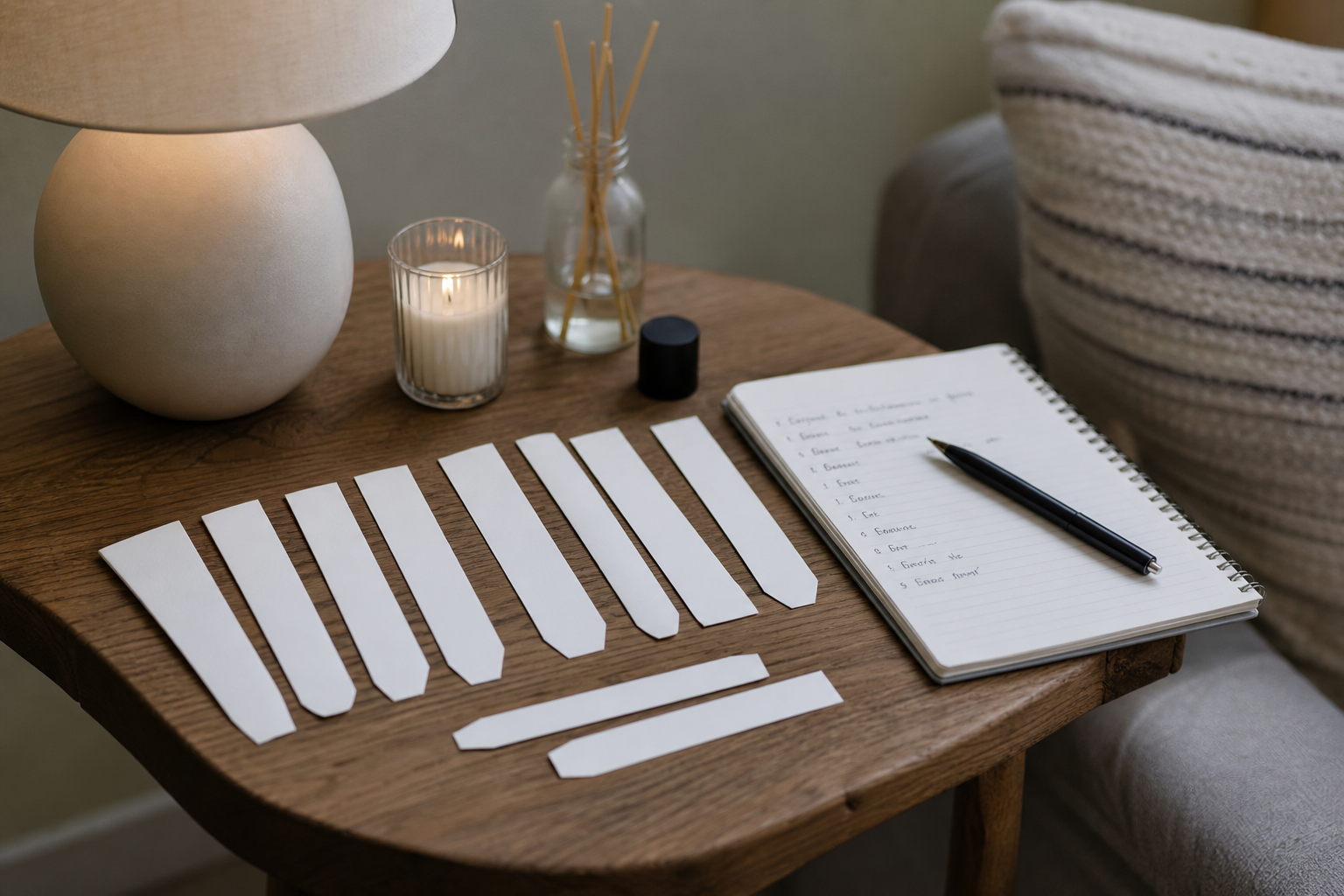
Keep the first session small. Test no more than three scents at once. More than that can make every card seem dull or strangely alike.
By now you should have a short list of one to three scents, each with a first impression and a clear room goal. Next, test how each one moves through air.
Step 3: Test the Fragrance on a Blotter and in the Air
Use a blotter for the scent profile, then use air movement to judge projection. These are two different tests, and you need both before buying a larger bottle.
Place the card on a clean surface. Smell the scent at three points:
- Right after application, for the opening.
- After 10 to 30 minutes, for the settling phase.
- After several hours, for the dry-down.
Now move the card into the room you plan to scent. Place it near the likely diffuser position, but don't put it inside the diffuser. Walk past it from different angles. Leave the room for a few minutes, then return. That return test often gives you a better read than holding the card under your nose.
Notice the difference between presence and reach. A scent can be rich at the card yet vanish two steps away. Another can seem quiet up close but spread well through a room.
Don't test every fragrance in the house at once. Strong scents cling to curtains, sleeves, and upholstered chairs. Use one card per scent and keep the cards apart. If you feel unsure, step outside for fresh air before the next check.
Paper is a filter, not a final answer. It cannot show how a fragrance responds to room temperature, air flow, or the pattern of a diffuser. It can still save time by removing scents you dislike before you spend more oil.
For a luxury home setting, write down three simple scores: scent appeal, reach, and comfort. A scent with high appeal but low comfort may work for short hosting periods. A softer scent may be better for a bedroom or shared family room.
The goal here is a shortlist. Keep the cards that still smell balanced after the first wait, then move those scents into a controlled air trial.
Step 4: Run a Small Cold-Air Diffuser Trial and Wait for Dry-Down
A small cold-air diffuser trial is the closest home test to real room scenting. It shows how the fragrance behaves in air without using heat to disperse the oil.
Start with one fragrance. Use the diffuser's lowest usable setting or the smallest test cycle available. The exact setting depends on the diffuser and room, so record what you used. Don't compare one scent at a high output with another at a low output.
Place the diffuser where you expect to use it. Keep it away from a closed cabinet or a blocked corner. For a small office, test it near the intended reception or shared area. For a home, test it in the living space rather than beside an open window.
Leave the room after starting the trial. Return at set times. Check the scent near the diffuser first. Then check the center of the room and the doorway. Ask someone else in the household for a blind opinion if possible. Tell them what to notice, not what to like.
Wait through the dry-down. A fresh opening can seem bright and forceful, while the settled scent may become warmer and quieter. The reverse can happen too. A mild first impression may build as the oil reaches more of the room.
The research set found that duration was reported for only eight items. Their average reported test duration was 7.25 hours. That missing data is a useful warning: don't assume a sample's size or price proves its staying power.
Cold-air diffusion gives you a better room-scale test than a card alone. Mila Marie Scents pairs sample cards with a heat-free cold-air diffuser in its Cold-Air Diffuser Bundle, so you can compare scent strength in the space where you plan to use it.
Heat-free diffusion is also a useful fit for households that want ambient scent without a heated oil source. If you need help comparing blend styles, our guide to fragrance oil blends for cold-air diffusers gives you a better starting point than choosing by bottle size.
By now you should know whether the scent feels present, balanced, and steady in the air. The next step is to test that result against your actual room conditions.
Step 5: Check Strength Against Room Size, Airflow, and Placement
Room size and airflow can change perceived fragrance strength more than the oil itself. Repeat the trial in the exact space where the larger bottle or diffuser setup will live.
Make a basic room map. Mark the diffuser spot, the main seating area, doorways, vents, fans, and open connections to other rooms. Then check the scent at each point. A scent that reaches the sofa but not the entry may need a different placement.
Air flow can carry fragrance away before it spreads. A strong vent may push scent into one corner. An open window may make a well-performing fragrance seem weak. Test with normal household conditions, not with every fan turned off.
Placement also affects comfort. A diffuser beside a chair may feel intense because the person sits close to the source. A central location may give a more even read. Keep the source away from places where children or pets can reach it, and follow the product's use instructions.
For a bedroom, use a lower-impact test and spend time in the room before bed. For a shared family room, check the scent during normal activity. For a small office, test it during the busiest period rather than in an empty room.
A useful decision rule is simple: choose the smallest output that gives the room an even scent. If you need the highest setting just to smell the fragrance near the source, the room, placement, or scent may be a poor match.
When your room is a bedroom, our notes on heat-free cold-air diffusers for bedrooms can help you think through quiet placement and lower-intensity use.
Step 6: Measure Longevity, Consistency, and Household Comfort
Judge a fragrance by its full use period, not by its first burst. Track how long you notice it, how evenly it spreads, and whether anyone finds it tiring.
Use a simple log. Write the scent name, test date, room, setting, and time of each check. Rate the scent at the start, after one hour, after four hours, and near the end of the test. Use a 1 to 5 scale if that feels easy.
Record three separate results:
- Longevity:How long the scent remains noticeable.
- Consistency:Whether the room feels evenly scented.
- Comfort:Whether the scent still feels pleasant after extended exposure.
Don't confuse your nose with the room. People can adapt to a scent and stop noticing it even while guests still smell it. Ask someone who has not been in the room all day to give a fresh impression.
Also test after a break. Leave the space for at least a short period, then return. If the fragrance feels harsh after the break, lower the output or choose another scent. If you cannot smell it at all, check placement before buying more oil.
Household comfort comes first. A family member may prefer a softer profile. A small office may need a scent that doesn't distract during long work periods. Families with kids or pets should follow the diffuser maker's safety guidance and keep oils out of reach.

Research notes found limitations in 13 of the reviewed items. Common problems included the one-dimensional feel of strips and sample volumes too small for a proper evaluation. A larger volume alone won't fix a weak test method. The delivery method must match the way you plan to use the fragrance.
Mila Marie Scents' Cold-Air Diffuser Bundle addresses that gap by letting you test fragrance oils through room air, not only on a card. Keep the scent that remains pleasant after repeated checks, not the one that wins the first sniff.
Step 7: Choose the Larger Bottle and Diffuser Setup With Confidence
Buy a larger bottle only when the scent passes your room test at the output you can live with. The right choice is the one that fits your space, schedule, and comfort level.
Before ordering, compare your notes with this short checklist:
- Did the fragrance reach the room without feeling sharp near the source?
- Did the dry-down remain pleasant after several hours?
- Did the scent work during the room's normal temperature and airflow?
- Did the household accept it after repeated exposure?
- Did you test the same output you expect to use later?
If the answer is yes, choose the bottle size that matches your expected use. Don't buy a larger volume just because the sample felt weak under poor placement. Fix the setup first.
Mila Marie Scents can help you move from testing to a more polished home scent plan. Depending on your space, ask about the ECHO Mini, PULSE, INFINITY, Elite Mini Pro, or Elite Car Pro. For fragrance direction, Luxuré Harmony, White Tea, and Velora Woods give you named starting points to discuss with us, without forcing a blind choice.
You can also decide if you want one signature scent or several. Use one oil in the main living area, then test a second scent in a separate room. If you plan to combine oils, read the guidance on layering two fragrance oils safely in a diffuser before mixing anything.
Keep your test notes after the purchase. They give you a useful baseline if you change rooms, adjust output, or try a new season of scent. That small record makes future choices faster and more precise.
Frequently Asked Questions
What is the best way to test fragrance strength before buying a larger bottle?
The best method is a home trial with a small amount in the intended room. Start with a scent card, then use a cold-air diffuser at a low setting. Check the doorway, center of the room, and area near the diffuser. Wait through dry-down before deciding. This shows projection and comfort better than a quick paper-strip sniff.
What is a heat free cold air diffuser?
A heat free cold air diffuser spreads fragrance oil without heating it. That makes it useful when you want to test ambient scent in a room rather than on skin. Run one scent at a time, keep the diffuser in its planned position, and compare the result at normal household settings.
Is a cold air diffuser bundle good for trying fragrance before you buy?
A cold air diffuser bundle can be a good try-before-you-buy method because it pairs small scent amounts with a room-scale test. Mila Marie Scents' Cold-Air Diffuser Bundle combines sample cards with heat-free diffusion and 15 fragrance options. It helps you compare scent reach before choosing a larger bottle.
Can I mix and match fragrance oils in a diffuser?
You can mix and match fragrance oils only when the product guidance supports it. Test each oil alone first, then use a small trial rather than filling the diffuser with an untested blend. Compare the combined scent after dry-down. A blend that smells pleasant on cards may feel much stronger in a closed room.
How long should I test a fragrance before buying it?
Test a fragrance for at least one full use period, and repeat the trial if you're unsure. A first impression shows the opening, while later checks reveal dry-down, reach, and comfort. For home fragrance, test during the room's normal morning or evening routine. If you still like it after a break, the result is more reliable.
Conclusion
Test fragrance strength in the room where you'll use it, with the same diffuser position and output you expect later. Start with the Mila Marie Scents sample pack or Cold-Air Diffuser Bundle, run one scent through a heat-free trial, and record how it feels after dry-down. Then choose the larger bottle that earns a place in your home, not the one that made the loudest first impression.
Best-selling diffusers & fragrances for your home
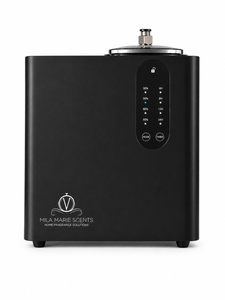
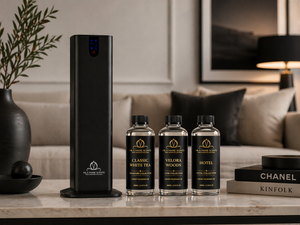
Which Diffuser Is Right for You?
| Feature | INFINITY | HALO Tower |
|---|---|---|
| Price | $399.00 | $229.00 |
| Coverage | Up to 16,000 sq ft | Up to 4,000 sq ft |
| Type | HVAC / Whole-Home | Floor Standing |
| App Control | Yes (Bluetooth) | Yes (Bluetooth) |
| Free Oils Included | Yes (3 Oils) | Yes (3 Oils) |
| Warranty | 1-Year | 1-Year |
| Guarantee | 30-Day | 30-Day |
Swipe to compare →
Get 15% Off Your First Order
Join the Mila Marie family for early access to new fragrances, exclusive offers, and expert scenting tips.