How to Layer Two Fragrance Oils Safely in a Diffuser
Most online guides show you which oils smell good together. Almost none tell you the ratios, the order, or the safety limits that actually matter. A beloved citrus oil like bergamot can cause problems if you layer it carelessly, and a peppermint blend diffused too long can do the opposite of what you expect. Here's the complete, step-by-step process for layering two fragrance oils safely in a cold-air diffusion system.
Step 1: Choose a Compatible Cold-Air Diffuser
Your diffuser type is the foundation. Not every diffuser handles layered fragrance oils the same way, and using the wrong hardware is where most people go wrong before a single drop is poured.
Cold-air diffusers work by pushing fragrance oil through a nebulizer with pressurized air, turning it into a fine dry mist. No heat, no water, no carrier dilution. That matters because heat changes the chemical structure of fragrance compounds, which can amplify irritants or destroy top notes entirely. A cold-air system keeps the oil's profile intact from bottle to room.
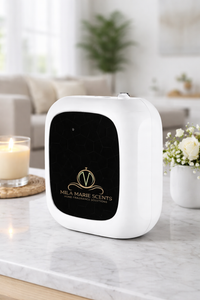
For layering two oils, you want a diffuser with a dedicated reservoir rather than a pad or wick system. Pads absorb both oils at once and muddy the blend before it even disperses. A reservoir lets you measure and mix with precision. The PULSE Diffuser in the Ultimate Luxury Bundle is built exactly for this: a clean reservoir, consistent cold-air output, and no residue left behind between scent changes.
Room size also shapes your hardware choice. A diffuser rated for 200 square feet will over-concentrate a blend in a small bedroom. One rated for 2,000 square feet will barely register in the same room if run at low intensity. Match the diffuser's rated coverage to your actual space before you start blending.
If you manage a shared office or a larger open-plan area, the coverage requirements shift significantly. The office diffuser resource guide covers how to match hardware to square footage for shared environments, including noise thresholds under 35 dB for open workspaces.
Step 2: Select Two Complementary Fragrance Oils
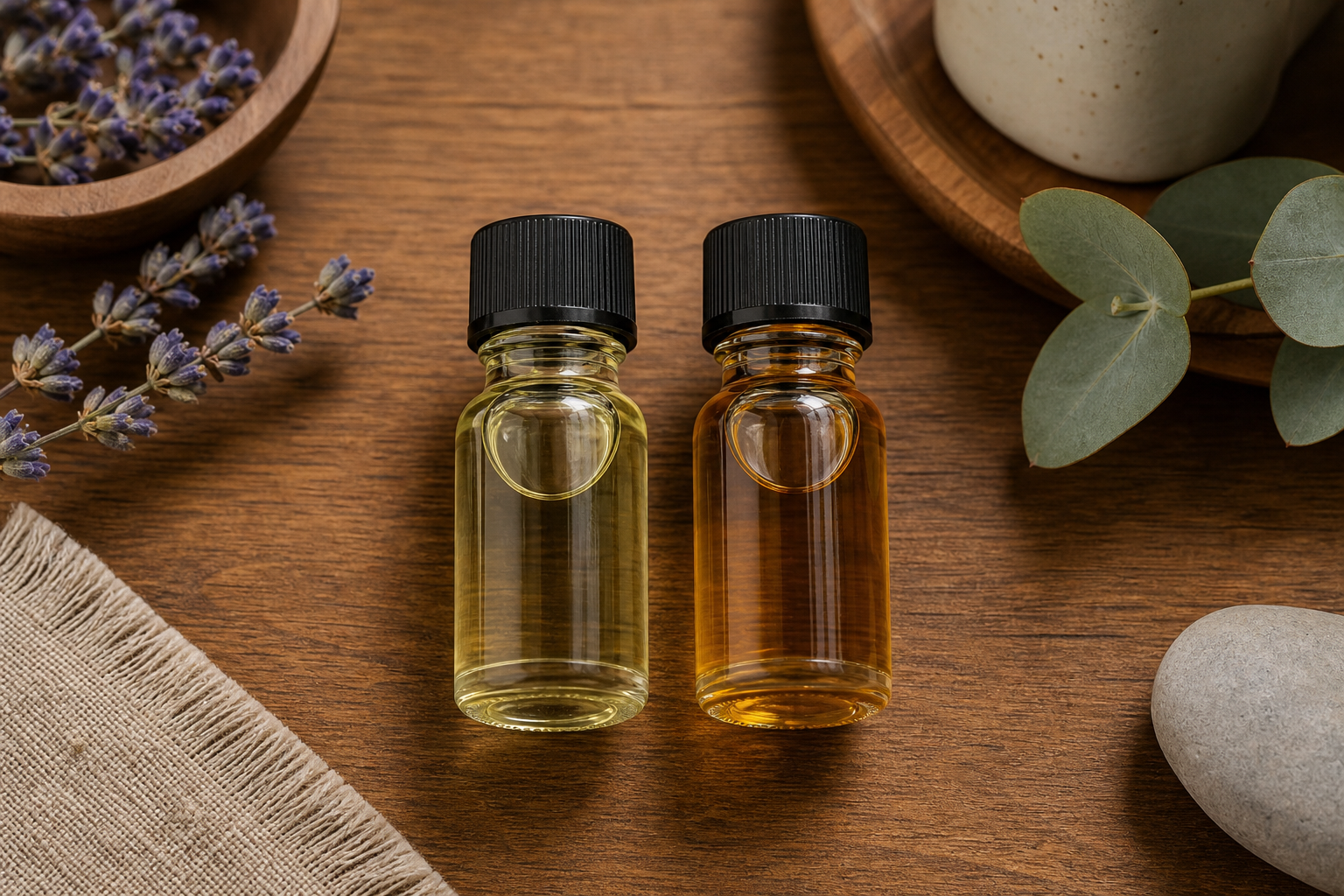
Choosing oils that work together is part chemistry, part intention. The goal is a blend where one oil leads and the other supports it, not two competing scents fighting for dominance.
A usable starting framework is the top-note and base-note pairing. Top notes are bright and volatile: citrus, mint, green herbs. Base notes are heavier and slower to disperse: woods, vanilla, musk. When you pair a top note with a base note, the top note greets the room first and then fades into the warmer base, giving the blend a natural arc.
Florals sit in the middle and pair well with either end of the spectrum. A floral-citrus blend reads fresh and uplifting. A floral-wood blend reads warm and intimate. Both work well in cold-air systems because neither note family is chemically reactive at room temperature.
Where you need to be careful is with high-intensity oils. Peppermint is the clearest example. Research from blending specialists notes that a peppermint-lavender blend should use a 1:6 ratio, one drop of peppermint for every six drops of lavender, because peppermint overwhelms the lavender if used in equal measure. That ratio is rarely published in video tutorials, which tend to list appealing pairings without any guidance on proportion.
Bergamot is another oil that carries a specific caution. It's phototoxic in topical applications, and while diffusion is not topical, it's worth knowing the oil's character before you layer it. Pair bergamot with a grounding base like sandalwood or cedarwood to keep the blend balanced rather than sharp.
At Mila Marie Scents, we've pre-tested pairings specifically for cold-air diffusion. The Citrus Luxe fragrance oil is formulated for cold-air waterless diffusers and pairs cleanly with floral or woody base notes, making it a reliable starting point if you want a citrus-forward blend without the guesswork.
Step 3: Prepare the Diffuser Reservoir Correctly
A clean reservoir is non-negotiable. Any residue from a previous oil will mix with your new blend and alter the scent profile, sometimes subtly, sometimes dramatically. Before you add a single drop of a new combination, clean the reservoir thoroughly.
For cold-air nebulizing diffusers, the standard cleaning method is isopropyl alcohol at 91% or higher. Add a small amount to the reservoir, run the diffuser for 30 seconds to flush the nebulizer, then empty and let it air-dry completely. This removes oil buildup from the atomizer without leaving water behind, which matters because water and fragrance oil don't mix and can clog the nozzle.
Once the reservoir is dry, do a quick inspection. Look at the nozzle tip for any crystallized oil residue. A cotton swab dipped in isopropyl alcohol clears that in seconds. A clogged nozzle produces uneven mist, which means your blend disperses inconsistently across the room.
Temperature matters too. Cold-air diffusers work best at room temperature, typically between 65°F and 75°F. A reservoir that's been sitting in direct sunlight or near a heat vent will warm the oil before diffusion, partially defeating the purpose of a heat-free system. Keep the diffuser away from windows and vents.
Fragrance molecules vary significantly in volatility, which is why temperature control during diffusion directly affects how a blend's top and base notes release and balance in the air.
Step 4: Add Oils in the Proper Ratio and Order
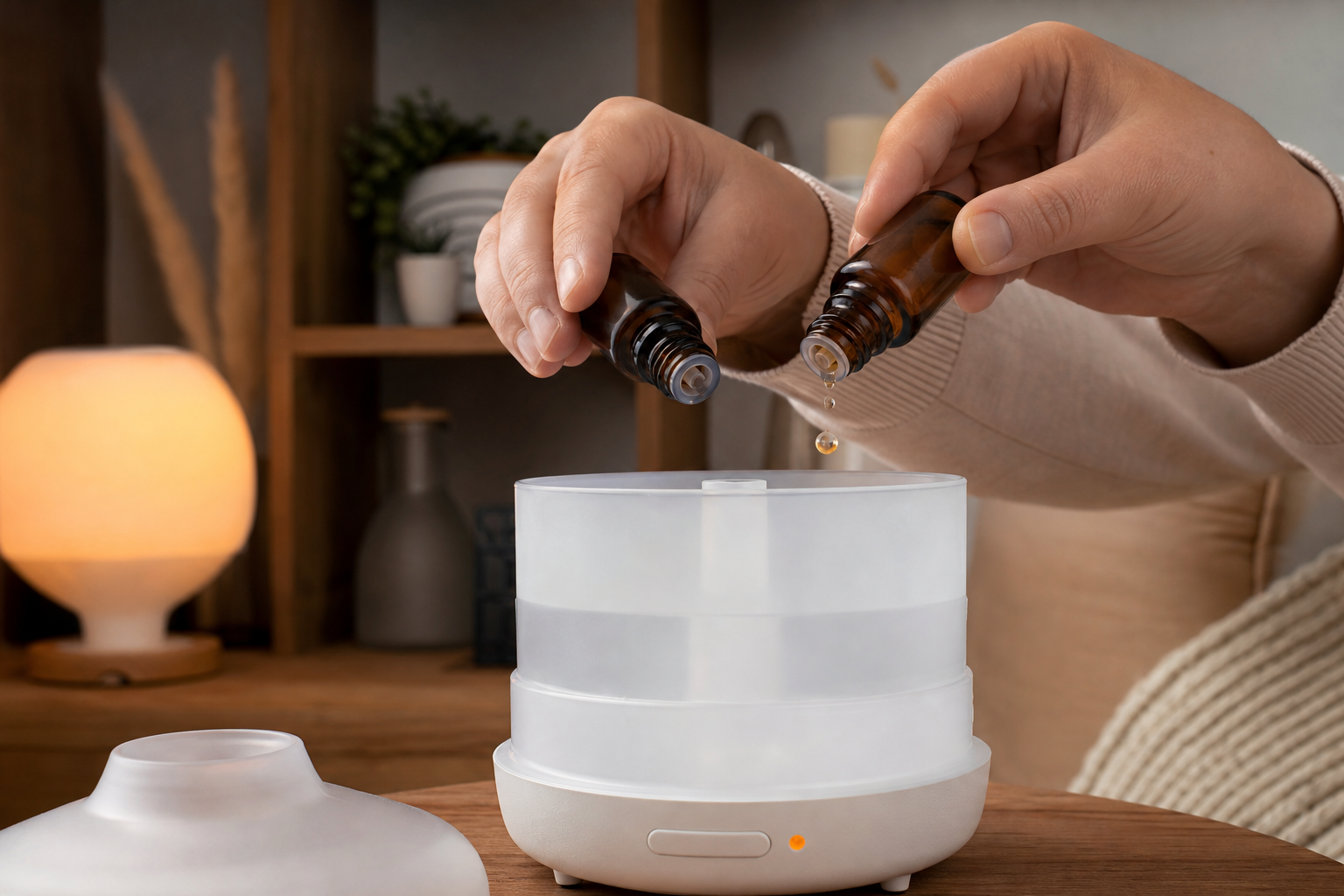
Ratio and order are where most layering attempts succeed or fail. The ratio determines which scent leads. The order determines how the oils sit in the reservoir and interact before diffusion begins.
A reliable starting ratio for most two-oil blends is 70:30. The dominant oil goes in at 70%, the supporting oil at 30%. This gives the blend a clear identity without making the secondary note disappear entirely. From that baseline, you can adjust: push to 80:20 if the supporting oil is very intense, or try 60:40 if both oils are mild and you want more balance.
Add the base note first, then the top note on top of it. Base notes are heavier and settle to the bottom of the reservoir. When the top note sits above them, the diffuser's airflow pulls both upward together through the nebulizer, which produces a more even mist than loading them in reverse order.
Use a dropper or pipette for precision. Eyeballing fragrance oil volumes leads to inconsistent results, especially with high-intensity oils like peppermint where a single extra drop shifts the entire balance. A 1 mL dropper gives you enough control to hit a 1:6 ratio accurately.
The total fill volume depends on your diffuser's reservoir size. Most personal cold-air diffusers hold between 3 mL and 10 mL. Fill to roughly 75% capacity to leave room for airflow above the oil surface. Overfilling can cause the oil to enter the air tube before it's atomized, which wastes oil and can damage the nebulizer over time.
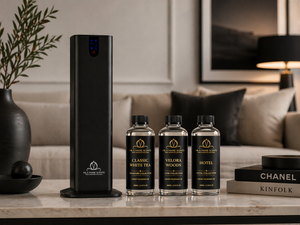
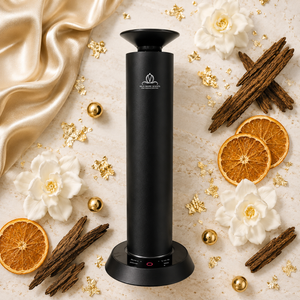
For a larger space, the Halo Tower luxury scent system handles up to 4,000 square feet with no water and no sticky residue, and its reservoir design is sized for precise multi-oil loading. It's a good fit when you're layering for a whole floor rather than a single room.
Step 5: Test, Adjust, and Maintain Safety
Once you've loaded the blend, run the diffuser at its lowest intensity setting for the first session. This is your baseline test. You're checking whether the ratio feels right, whether the blend disperses evenly, and whether anyone in the space has a sensitivity reaction.
A 30-minute first run is the right window. Research on peppermint-rosemary blends specifically flags that diffusing beyond 30 minutes can paradoxically increase tension rather than reduce it, which runs counter to what most people expect from those oils. The same logic applies to any high-intensity oil: more time doesn't mean more benefit. It often means more irritation.
After 30 minutes, step out of the room for five minutes and then re-enter. Your nose resets when you leave the space, and that fresh impression tells you whether the blend is balanced or whether one note is dominating. If the top note is too sharp, reduce it by 10% in your next batch. If the base note is too heavy, increase the top note slightly.
Safety maintenance is ongoing, not a one-time step. The table below summarizes the key safety parameters for common two-oil blend types in cold-air diffusion systems.
Ventilate the room between sessions. Open a window or door for five minutes before running a second cycle. This prevents compound buildup in the air, which is the main cause of headaches from otherwise safe oils. Guidance on volatile organic compounds and indoor air quality notes that even naturally derived fragrance compounds can accumulate indoors without adequate air exchange.
Clean the reservoir every three to four days during regular use. Oil oxidizes over time, and a blend left sitting in the reservoir for a week will smell different on day seven than it did on day one. Fresh oil in a clean reservoir is always the better choice over topping off a stale batch.
At Mila Marie Scents, the luxury fragrance oil collection includes options pre-formulated for cold-air systems, which removes the compatibility guesswork entirely. Each oil is tested for consistent cold-air performance, so you're starting with a known variable rather than an unknown one.
FAQ
Can you mix two fragrance oils directly in a cold-air diffuser?
Yes, you can mix two fragrance oils directly in a cold-air diffuser reservoir. Add the base note first, then the top note, and use a 70:30 ratio as a starting point. Cold-air nebulization keeps both oils chemically stable since no heat is involved. Always start with a 30-minute test run at low intensity before committing to a longer session.
What fragrance oils should not be mixed together?
Avoid mixing two high-intensity top notes like peppermint and eucalyptus at equal ratios. They compete rather than blend, and the combined intensity can cause headaches in enclosed spaces. Similarly, two heavy base notes like patchouli and vetiver at equal volumes tend to produce a flat, muddy scent with no lift. Pair one dominant note with one supporting note for best results.
How long should you run a diffuser with a blended oil?
30 to 60 minutes per session is the safe range for most two-oil blends in a cold-air diffuser. Blends containing peppermint or rosemary should stay at 30 minutes maximum, as research shows extended diffusion of those oils can paradoxically increase tension. Always ventilate the room for five minutes between sessions to prevent fragrance compound buildup.
What is the right ratio for layering two fragrance oils?
A 70:30 ratio works well as a starting point for most pairings. The dominant oil takes 70% and the supporting oil takes 30%. For high-intensity oils like peppermint, drop the ratio further, as low as 1:6 (one part peppermint to six parts lavender). Adjust in 10% increments after each test session until the blend smells balanced on re-entry to the room.
Is it safe to layer fragrance oils in a diffuser around kids and pets?
Heat-free cold-air diffusers are the safest hardware option for homes with kids and pets because they don't produce heat or combustion byproducts. Keep sessions to 30 minutes, use the lowest intensity setting, and ensure the room has ventilation. Avoid eucalyptus and tea tree oils around cats, as those compounds can be toxic to felines even at low airborne concentrations.
Conclusion
Layering two fragrance oils safely comes down to five things: the right hardware, compatible oils, a clean reservoir, a precise ratio loaded in the correct order, and short test sessions with ventilation between them. Most DIY guides skip at least two of those. If you want to skip the trial-and-error entirely, Mila Marie Scents' Heat-Free Cold-Air Diffuser Bundle gives you a pre-tested, safety-vetted pairing designed specifically for cold-air diffusion. Browse the bundles at milamariescents.com and start with a blend that's already done the work for you.
Best-selling luxury fragrance oils
Get 15% Off Your First Order
Join the Mila Marie family for early access to new fragrances, exclusive offers, and expert scenting tips.