Best Scent Intensity Settings for Open Plan Lofts
Getting scent right in an open plan loft is harder than it sounds. Too low and you smell nothing past the kitchen island. Too high and guests are reaching for the door. This guide walks you through every setting, placement decision, and scheduling trick that actually works for large, high-ceiling spaces.
Step 1: Start with the Right Diffuser System (Our Top Pick: Mila Marie Scents)

The first decision shapes everything else. Before you touch an intensity dial, you need a diffuser that can actually push scent across an open volume without a wall to bounce off. Most ultrasonic humidifier-style units are built for a single enclosed room. In a loft, that means dead zones everywhere.
For large open-plan spaces, a cold-air floor diffuser designed for high-volume coverage is the right category to look at. Cold-air diffusion keeps fragrance molecules intact, so the scent you smell is true to the oil, not a cooked-down version of it.
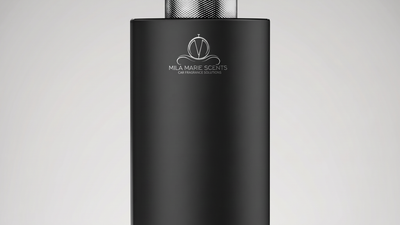
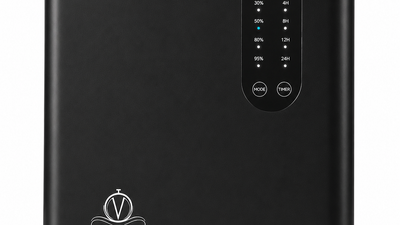
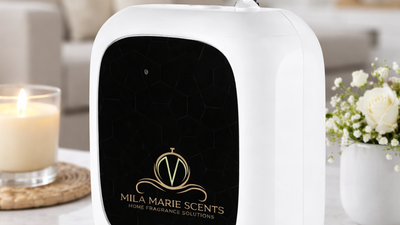
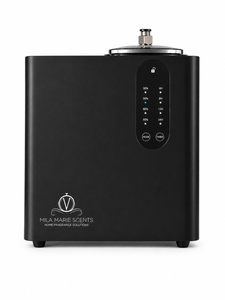
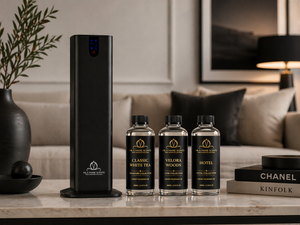
For a large open loft, the HALO Tower is a free-standing floor tower rated for up to 4,000 square feet of open space, with an 800ml reservoir and a lockable housing. For spaces that tie into an HVAC system, the INFINITY connects to existing ductwork and is rated up to 16,000 square feet. The PULSE sits in the middle at up to 1,800 square feet with Bluetooth control, making it a usable starting point for most residential open-plan layouts.
One thing worth knowing: coverage figures are manufacturer-stated, and there is no shared industry testing standard behind them. That matters because coverage area alone tells you nothing about how strong the scent will feel in your space. We'll get into how to calibrate for that in the next step.
Step 2: Set the Right Intensity Level for High Ceilings and Open Volumes
Standard intensity guidance assumes eight-foot ceilings. Lofts routinely hit twelve, fourteen, even eighteen feet. That extra cubic volume dilutes scent fast, so the same setting that fills a bedroom will feel faint in your living space.
Here is a usable starting framework based on loft ceiling height and square footage. These are calibration starting points, not fixed rules. Your HVAC activity and how many windows you keep open will shift them.
The key adjustment technique is the "cold nose" reset. When you live in a space, your brain filters out familiar smells within minutes. That is called olfactory fatigue, and it will fool you into cranking intensity too high. Instead, step outside for five full minutes, then walk back in and take one slow breath near the center of the room. That single breath tells you where the scent actually sits for a first-time visitor.
For lofts above 1,500 square feet, starting at medium-high and adjusting down is smarter than starting low and chasing the scent. Ramp-up time on cold-air diffusers is real. Once the space reaches the right level, you can hold it at a lower maintenance intensity rather than running full power all day.
If your loft connects to a home office or sleeping area, check out the diffuser resource guide for office spaces for zone-specific intensity tips that complement what you set in the main living area.
Step 3: Choose the Right Diffuser Technology for Even Scent Distribution
Not all diffuser technology is equal in an open plan space. The method a diffuser uses to atomize oil determines how far the scent travels and how long it stays airborne.
Cold-Air Nebulizing (Best for Lofts)
Cold-air nebulizing diffusers break fragrance oil into a dry nano mist without water or heat. The particles are small enough to stay suspended in the air for extended periods rather than dropping to the floor quickly. This is why hotel lobbies use them. The scent reaches across wide-open floors instead of pooling near the unit.
Ultrasonic (Limited Range)
Ultrasonic diffusers mix oil with water and create a visible mist. They work well in smaller enclosed rooms, but the water content makes the mist heavier. It tends to settle faster, which limits effective range in a space with high ceilings or strong air movement from an HVAC system.
Heat-Based (Not Recommended)
Wax warmers and plug-in heat diffusers alter the chemical composition of fragrance molecules as they burn. The scent you smell is chemically different from the original oil, and the intensity degrades unpredictably. In a loft with natural convection from high ceilings, heat-based scent disperses unevenly.
HVAC Integration (Best for Whole-Space Coverage)
Attaching a cold-air diffuser directly to your HVAC intake or duct system distributes scent through every vent simultaneously. This solves the dead-zone problem without requiring multiple standalone units. The PULSE and the INFINITY are designed for this setup. For a detailed comparison of HVAC-integrated options, the Infinity vs Aroma360 HVAC diffuser breakdown covers the technical differences clearly.
Step 4: Place Your Diffuser Strategically to Fight Airflow and Dead Zones

Placement is where most loft owners lose the battle. They put the diffuser in a corner because it looks tidy, and then wonder why half the space smells like nothing. Open plan layouts punish corner placement because there is no wall to reflect scent back into the room.
The Center-Mass Rule
Place your primary diffuser roughly one-third of the way into the room from the main entry point. This lets scent ride natural foot-traffic airflow toward the living zone. Think of it as positioning where air movement already goes, not where furniture arrangement suggests.
Account for HVAC Vents
HVAC return vents pull air toward them. A diffuser placed directly under or near a return vent loses most of its output immediately. Identify your return vents first, then position the diffuser at least six feet away. Supply vents, on the other hand, can work in your favor. A diffuser placed just outside a supply vent's airstream gets its mist carried across the room without the fan pulling it straight into the ductwork.
Use Height to Your Advantage
Cold-air nano mist is lighter than ultrasonic mist, but it still benefits from elevation. A diffuser at counter height (roughly 36 inches) puts the output at a level where normal air circulation can carry it horizontally. Floor-level placement in a loft tends to create a low scent band that guests walk through briefly rather than experience throughout the space.
Two-Unit Strategy for Large Lofts
For larger lofts, one unit rarely covers the full layout evenly. A two-unit approach works well: one near the entry or living zone, one near the kitchen or dining transition. Run them at matched intensity levels so neither zone dominates. The whole-home fragrance systems guide covers multi-unit configurations in more detail for larger residential layouts.
Step 5: Build a Scent Schedule That Adjusts Intensity Throughout the Day
Running a diffuser at high intensity for twelve straight hours wastes oil, overwhelms the space, and accelerates olfactory fatigue for anyone who stays home all day. A timed schedule does more with less.
Morning: Ramp Up Before You Move Through the Space
Set the diffuser to start 20 to 30 minutes before you wake up or before guests arrive. Starting at medium intensity gives the scent time to reach equilibrium throughout the open volume. Walking into a scented space feels very different from watching it build from nothing, and that first impression matters.
Daytime: Drop to Maintenance Level
Once the space reaches your target scent level, you can drop intensity by 20 to 30 percent and the scent holds. Cold-air diffusers don't need to run at full power to maintain what's already in the air. This is especially true in a loft where you're not constantly opening windows or running exhaust fans.
Evening: Raise Slightly for Gatherings
More people in the space means more body heat, more air movement, and faster scent dilution. Bump intensity back up by 15 to 20 percent when you expect guests. Bluetooth-enabled diffusers like the PULSE let you adjust this from your phone without walking over to the unit.
Night: Off or Near-Zero
While you sleep, scent accumulates without ventilation, which can become uncomfortable by morning. Either switch off the diffuser two hours before bed or drop it to the lowest setting, around 10 percent, if you prefer a light ambient scent overnight. Most smart diffusers have app-based scheduling so this happens automatically.
One pattern that works well for loft owners: a 30-minutes-on, 15-minutes-off cycling interval during the day rather than continuous operation. The scent doesn't noticeably drop during the off cycle, but oil consumption drops significantly over a week.
Step 6: Choose Fragrances That Suit Open Loft Aesthetics and Project Well
Scent character matters as much as intensity. A heavy, resinous fragrance at medium intensity can feel more overwhelming in an open plan space than a lighter citrus scent at high intensity. The projection behavior of different fragrance families is worth understanding before you lock in your oil choice.
Top-Note-Forward Fragrances (Project Furthest)
Citrus, green, and ozonic fragrances carry well across open spaces because their volatile molecules stay airborne longer and travel further from the diffuser. Our Citrus Bloom(crisp citrus with white florals and cedar) and Coastal Life(fresh green notes with clean musk) work particularly well in industrial-style lofts where the architecture is already bold.
Woody and Amber Bases (Best for Evenings)
Warmer, heavier bases like sandalwood, oud, and amber don't carry as far, but they create a sense of enclosure in an otherwise open space. That can be a deliberate design choice. Our OUD fragrance oil and warm amber-forward blends suit evening settings where you want the space to feel warm and intentional rather than airy.
Hotel-Inspired Scents (Consistent and Balanced)
Hotel lobbies are essentially open-plan spaces engineered for fragrance performance. Hotel-inspired oils are blended to project evenly, avoid polarizing reactions, and maintain character at varying intensity levels. Our hotel collection gives you a range of options in this category, blended for ambient diffusion rather than personal wear.
If you're not sure which direction to go, the scent sample pack lets you test oils before committing to a full bottle. Given that diffuser oil consumption in a large loft adds up fast, testing first saves real money.
Step 7: Keep Intensity Safe for Kids, Pets, and Long-Term Use
Higher intensity settings in a well-sealed loft raise the ambient concentration of fragrance molecules in the air. For most adults, this is a comfort question. For kids, pets, and people with respiratory sensitivities, it becomes a genuine health consideration.
Volatile organic compounds from fragrance products can accumulate indoors, particularly in tightly sealed spaces with limited ventilation. This doesn't mean diffusers are dangerous, but it does mean ventilation matters, especially at higher intensity settings.
Usable Safety Rules for Lofts with Kids or Pets
- Cap intensity at 50 to 60 percent in spaces where children or pets spend extended time
- Run the diffuser with at least one window cracked open during high-intensity periods
- Place the unit where a child or a pet cannot reach it, knock it over, or get at the oil
- Take a break from diffusion for 30 to 60 minutes during the day to let the space air out
These are waterless cold-air diffusers, so there is no heat, no flame, no hot surface and no added humidity. For families managing shared open spaces, that mechanical difference from a candle or a warmer matters more than any intensity setting.
Frequently Asked Questions
What intensity setting should I use for a 1,500 square foot loft?
For a 1,500 square foot open-plan loft with ceilings between 12 and 14 feet, start at medium-high intensity, around 55 to 65 percent. Run the diffuser for 20 minutes before occupying the space to build an even baseline. Use the cold-nose test after stepping outside briefly to calibrate without olfactory fatigue skewing your read.
Can a heat-free cold air diffuser really fill an open loft?
Yes, but only if the unit is sized correctly. A heat-free cold air diffuser rated for 1,000 square feet will not adequately cover a large open loft regardless of intensity setting. Match the diffuser's rated coverage to at least 1.5 times your loft's floor area, and consider HVAC integration for larger spaces to achieve even distribution.
How often do I need to refill fragrance oil in a large loft?
Refill frequency depends on intensity setting and run time. Oils are sold in 120ml, 200ml and 500ml bottles, and on the PULSE a 200ml bottle is rated for up to 30 days. Higher intensity settings consume oil faster. Keeping more than one oil on hand lets you rotate scents and manage refill costs more predictably.
Is it safe to run a diffuser all day in a sealed loft?
Running a cold-air diffuser continuously in a tightly sealed space can raise fragrance VOC levels over time. Open a window periodically, especially at high intensity, and build in at least one 30-minute off cycle during the day. For households with pets or young children, cap intensity at 50 to 60 percent and ensure some air exchange.
What fragrance works best in an industrial open-plan loft?
Citrus, green, and clean musk fragrances project furthest and complement the open, airy feel of industrial architecture. Hotel-inspired scents are designed for ambient diffusion in large open spaces and tend to be well-balanced at varying intensity levels. Try a luxury fragrance oil sample pack before committing to a full bottle for a large space.
Can I use a smart app to control scent intensity in my loft?
Yes. Bluetooth-enabled cold-air diffusers like the PULSE connect to an app on your phone, letting you adjust intensity and set schedules without being near the unit. This makes it usable to lower intensity during daytime working hours and raise it automatically before guests arrive in the evening.
Conclusion
Dialing in the right intensity for an open-plan loft is a process, not a one-time setting. Start with a cold-air diffuser sized for your actual cubic volume, position it away from HVAC returns, and use the cold-nose test to calibrate without fooling yourself. If you're ready to get the hardware right first, the best diffusers for large rooms guide is a usable next step for matching unit to space before you spend anything.
Best-selling diffusers & fragrances for your home
Which Diffuser Is Right for You?
| Feature | INFINITY | HALO Tower |
|---|---|---|
| Price | $399.00 | $229.00 |
| Coverage | Up to 16,000 sq ft | Up to 4,000 sq ft |
| Type | HVAC / Whole-Home | Floor Standing |
| App Control | Yes (Bluetooth) | Yes (Bluetooth) |
| Free Oils Included | Yes (3 Oils) | Yes (3 Oils) |
| Warranty | 1-Year | 1-Year |
| Guarantee | 30-Day | 30-Day |
Swipe to compare →
Get 10% Off Your First Order
Join the Mila Marie family for early access to new fragrances, exclusive offers, and expert scenting tips.