How to Use Scent Sample Cards
A scent card can tell you what a fragrance smells like. It can't always tell you how that fragrance will feel in your home. The safest way to choose a permanent scent is to test each card in the room, narrow your list, then test the actual fragrance oil before buying a full bottle.
This process helps you compare scent notes, room fit, staying power, and cold-air diffuser compatibility without relying on one quick sniff.
Step 1: Order and Organize Your Scent Sample Cards
Start by sorting your scent sample cards before you smell them. A simple system keeps one strong card from making every later scent seem weak.
Choose a sample source that matches your goal. A personal fragrance discovery set may help you study fine fragrance. A home scent card pack is better when you need to judge a living room, office, entryway, or open floor plan.
Some kits contain many scent options, but quantity alone doesn't solve the testing problem. In a review of 11 sample kits, the average set had 6.29 scents and the median was five. The largest set had 12 scents. Yet the research found no permanent-oil sample in those kits except the Mila Marie Scents entry.
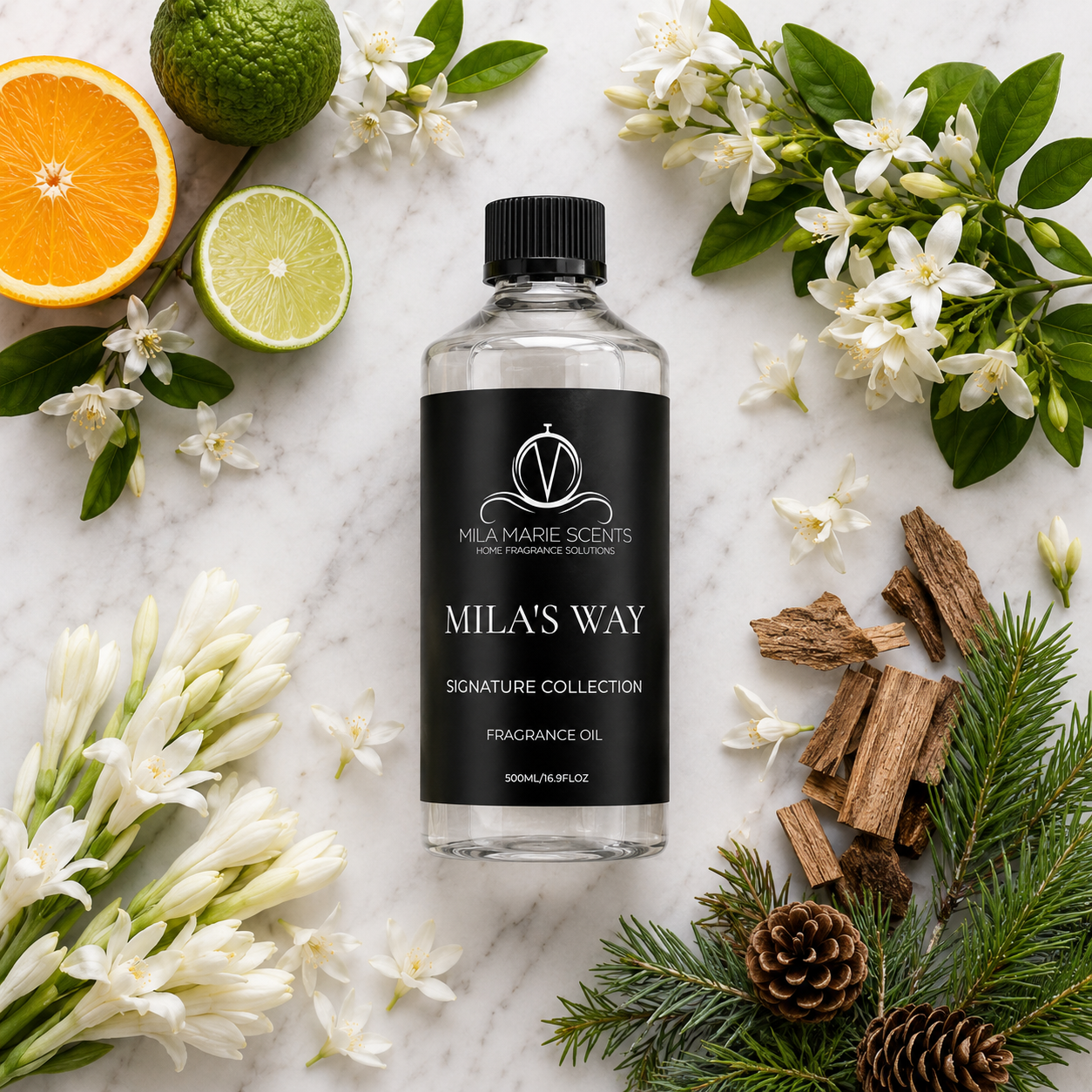
That gap matters. Paper gives you an opening impression. Actual oil lets you test the material that will run through your diffuser. Mila Marie Scents positions its Scent Card Sample Pack as a fragrance tasting kit for homes, offices, and boutiques, with fragrance-oil material included in the research record.
Before you test anything, label a sheet with these fields:
- Card name or scent name
- First impression
- Strength after 10 minutes
- Room where it fits best
- Words that describe the mood
- Any note that feels tiring or sharp
Keep the cards in their original order. Don't place them in a scented drawer, near candles, or beside cleaning products. Strong smells can cling to paper and distort your first read.
If you need help matching a sample pack to a full scent system, visit the Build Your Diffuser System page after the card test.
For added context, a home fragrance sample card can help you compare scents before choosing one. That same idea applies here: sample first, then make the larger purchase.
Set your cards on a clean surface, away from food and other fragrance. You now have a fair test area and a record sheet.
Step 2: Smell Each Card Correctly and Record Your First Reaction
Smell one card at a time, first at a distance and then close to the card. This gives you a cleaner read on both room presence and note detail.
Hold the card several inches from your face. Take one or two light breaths. Don't press the card against your nose. You're trying to judge how the scent enters a room, not how it smells when concentrated under your nose.
Write your first reaction within a few seconds. Use plain words such as:
- Fresh
- Dry
- Soft
- Woody
- Clean
- Sweet
- Smoky
- Too sharp
Then wait at least 10 minutes before rating the card again. The first impression may feel bright or intense. The later impression may feel warmer, softer, or less distinct.
Don't test every card in one sitting. Four to six cards is enough for a first round. Take a break when your nose starts to treat every scent as the same. This is olfactory adaptation, which means your awareness of a repeated smell drops over time. Olfaction, the sense of smell, depends on more than a single quick sniff, so your notes should capture changes over time.
Test cards in the room where you expect to use the scent. A card that feels polished in a small bedroom may feel too thin in an open living area. A rich wood note may feel inviting in an entryway but heavy beside a dining table.
Use a simple score from one to five for each measure:
- Personal appeal
- Room fit
- Strength
- Comfort after 10 minutes
- Suitability for regular use
A scent with a perfect first impression can still lose if it feels tiring after 10 minutes. Mark that clearly. Your permanent scent needs to work on ordinary days, not only during the first exciting test.
If you plan to host often, compare the cards beside the dining room without placing them directly over food. Scent strength is part of the room experience.
By now, you should have a short note beside every card and a first list of scents that feel pleasant after the initial rush fades.
Step 3: Narrow the Cards to Three Finalists and Retest Them
Choose three finalists, then test them on separate days. Three gives you enough contrast without making the decision feel like a scent exam.
Remove any card that fails one of these tests:
- You dislike it after the first few minutes.
- It feels too strong for the room.
- It clashes with the home's mood.
- You can't imagine smelling it several times each week.
Don't rank the finalists by scent count or label prestige. A 12-scent set gives you more choices, but it doesn't guarantee a better home fragrance decision. The material matters more than the size of the card set when your goal is a permanent oil.
Retest finalist one on day one, finalist two on day two, and finalist three on day three. Use the same room at roughly the same time. Keep windows, fans, and nearby activities as similar as you can.
Write down how the room feels after 15 to 30 minutes. You don't need lab-grade conditions. You do need a fair comparison. A scent that wins at breakfast may not win at night, so test the time when you expect the diffuser to run.
Use the same scale again. If your score changes sharply, trust the second test more than the first. Excitement often lifts a new scent's rating. Familiarity gives you a better picture of daily use.
For a signature scent, the goal is steady appeal. A scent can be memorable without being loud. Define the mood, test the profile, then match the diffuser to the space.
At the end of this step, one scent should lead for your main room. Keep the other two as backup options for a bedroom, season, or future rotation.
Step 4: Match the Winning Card to Your Room, Lifestyle, and Diffuser
A winning scent still needs the right room and diffuser. Match the fragrance to the space before you commit to a permanent bottle.
Start with room use. An entryway can handle a scent that makes a clear first impression. A bedroom usually calls for something softer. A home office needs a profile that stays comfortable during long work blocks.
Next, note the room's size and airflow. Open doors, high ceilings, fans, and HVAC movement can change how far scent travels. A small diffuser may suit one closed room. A larger system may make more sense for connected areas.
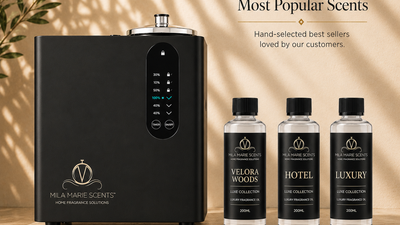
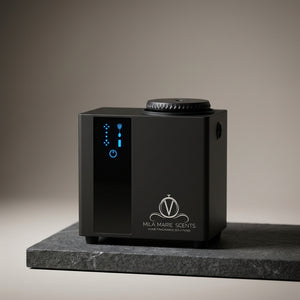
Choose a heat-free cold-air diffuser when you want fragrance oil to move through the room without using heat. Mila Marie Scents lists several system names, including ECHO Mini, PULSE, INFINITY, Elite Mini Pro, and Elite Car Pro. The right choice depends on your room plan and intended use, so check the product details before matching a unit to your finalist.
For fragrance names, Mila Marie Scents also identifies options such as Luxuré Harmony, White Tea, and Velora Woods. Treat these as candidates to test, not automatic winners. The card still has to work in your home.
Placement changes the result. Put the diffuser where natural air movement can carry the scent through the room. Avoid placing it directly beside a seat, meal, or sleeping area. A scent that feels balanced across the room may feel too strong at close range.
Families with kids or pets should keep the device and oil where they can't reach them. Renters can start with one room instead of trying to scent an entire apartment. Small offices should test the shared area at a low setting before making the scent part of the daily workday.
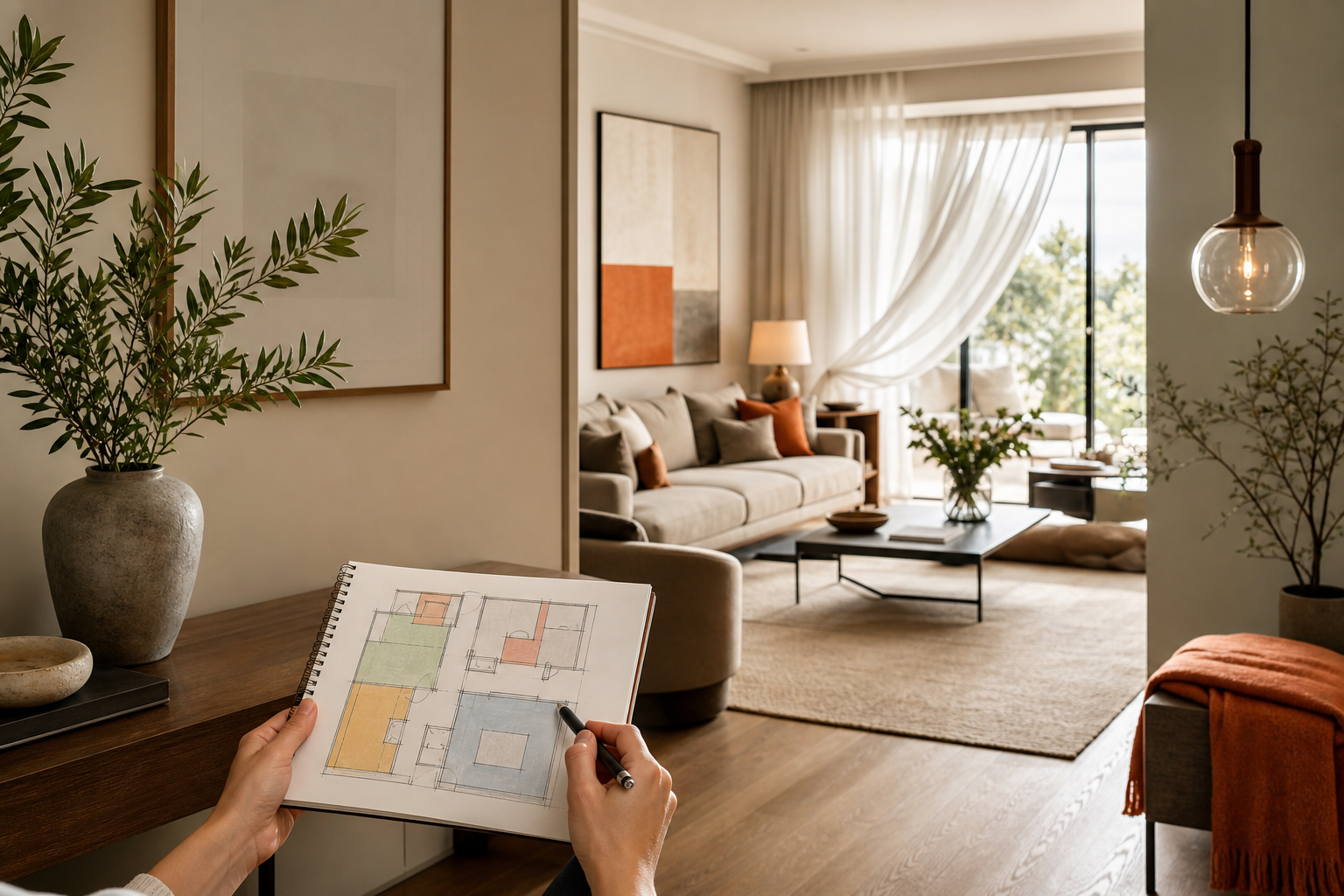
If you want to plan several rooms, map zones before buying extra oil; see more room-planning information.
Step 5: Test the Permanent Fragrance Before Making It Your Signature Scent
Test the actual fragrance oil before you make it your permanent scent. A card can shortlist the right profile, but oil confirms how the fragrance behaves in your diffuser.
This is where many sample kits fall short. The research reviewed 11 kits and found that only one reported fragrance oil as the sample material. The rest left that field blank. More cards don't fix a missing oil test.
Mila Marie Scents is the useful exception in that research set because its sample offering includes fragrance-oil material. That gives you a better way to compare the scent with your own diffuser, room temperature, airflow, and schedule.
Use a small test area first. Run the finalist at a low setting for a short period. Leave the room, then return later. Ask three questions:
- Can you notice the scent without searching for it?
- Does it still feel pleasant after the room settles?
- Does it fit the room when people are present?
Keep the same oil in the diffuser during the test. Changing oil too soon can leave traces from the previous scent and blur the result. If you switch oils, follow the diffuser maker's cleaning instructions before judging the next one.
Test at least once during the day and once during the evening if that matches your routine. A fragrance can feel crisp in daylight and warmer at night. Neither response is wrong. You just need to know which one suits your home.
Don't mix oils during the first test. Mixing makes it harder to tell which note caused a good or bad reaction. If you later want to mix and match fragrance oils, test each oil alone first. Then try a small blend outside the main diffuser reservoir when the product instructions allow it.
A permanent scent should pass a simple decision rule: you like it in the room, at the planned strength, after repeated exposure. If it only works on a card, keep looking.
For technical guidance on oils made for cold-air systems, follow the product instructions. Then order the full-size oil only after the real-room test feels right.
Frequently Asked Questions
How do you use scent sample cards to choose a home fragrance?
Use scent sample cards to shortlist fragrances, then retest the finalists in the room where you'll use them. Smell one card at a time, record your first reaction, wait 10 minutes, and score the scent again. Before buying a full bottle, test the actual fragrance oil in your diffuser if a sample is available.
What is a heat free cold air diffuser?
A heat free cold air diffuser releases fragrance oil without heating it. To choose one during scent testing, match the diffuser to your room size, airflow, and schedule. Test the scent at a low setting first. Mila Marie Scents offers named systems such as ECHO Mini, PULSE, and INFINITY, with final selection based on your space.
Is a cold air diffuser bundle better than buying a diffuser alone?
A cold air diffuser bundle can be useful when it includes the device and a fragrance oil you can test or identify clearly. Compare the scent material before buying. A bundle with many paper cards may still leave you guessing about the permanent oil. Look for a kit that supports a real-room test.
How can I try before I buy home fragrance?
To try before you buy home fragrance, order a scent card pack and test the cards in your own rooms. Narrow the list to three scents, then test the matching oil when possible. The Mila Marie Scents Scent Sample Pack is positioned as a fragrance tasting kit for homeowners, renters, offices, and boutiques.
Can I mix and match fragrance oils after testing sample cards?
You can mix and match fragrance oils after testing each oil alone. Start with one clear favorite, then test a small blend only if the diffuser instructions allow it. Don't mix several scents at once. A blend is easier to judge when one oil leads and the second acts as a light accent.
What should I look for in a luxury fragrance oil sample pack?
A luxury fragrance oil sample pack should make the sample material clear and help you test the scent in your own space. Check how many scents it includes, whether the samples contain actual oil, and whether the profiles suit your rooms. A larger card count is less useful if it doesn't support a real diffuser test.
Conclusion
Use cards to narrow your choice, but trust the actual oil in your own room. Start with the Mila Marie Scents Scent Sample Pack, record your top three, and test the finalist in the diffuser you plan to keep. That small extra step turns a promising card into a scent you can live with.
Car diffusers & portable scenting
Get 15% Off Your First Order
Join the Mila Marie family for early access to new fragrances, exclusive offers, and expert scenting tips.