How to Pair Citrus and Woody Notes
Citrus can make a room feel bright in seconds. Wood can give it calm depth. The trouble starts when both notes compete, leaving guests aware of the scent before they notice the room.
To pair citrus and woody notes without overpowering guests, start with one bright citrus, add a grounding wood, use a 75:25 starting ratio, and diffuse in short bursts. These steps work well with a heat-free cold-air diffuser such as the Mila Marie Scents ECHO Mini.
Step 1: Choose One Bright Citrus Note and One Grounding Wood
Choose one citrus note for lift and one wood note for depth. A two-note blend is easier to control than a crowded mix.
Begin with the mood you want guests to feel. Lemon feels crisp and direct. Orange or sweet orange feels softer and warmer. Bergamot has a polished citrus tone. Grapefruit can feel sharp and fresh, while lime adds a more pointed edge.
For the wood, choose a note that supports the citrus instead of fighting it. Sandalwood is a smooth choice for a calm room. Cedarwood feels dry and clean. Vetiver and patchouli bring more weight, so they need a lighter hand. Oud is also deep and strong, which makes it better for a large room or a low-intensity setting.
A simple first pairing is bergamot with sandalwood. Another is orange with cedarwood. If you want a cooler profile, try lemon with cedarwood. Think of the blend as a host's welcome: the citrus opens the door, while the wood keeps the room settled.
Safety comes first when you work with fragrance oils. Keep oils away from children and pets, avoid ingestion, and clean spills at once.
For a ready-made route, Mila Marie Scents pairs luxury fragrance oils with heat-free cold-air diffusers. ECHO Mini, PULSE, INFINITY, Elite Mini Pro, and Elite Car Pro give you different ways to scent a home, office, or smaller space. You can also compare the method in How to Layer Two Fragrance Oils Safely in a Diffuser.
Step 2: Start With a Conservative Citrus-to-Wood Ratio
Start with 75% citrus and 25% woody fragrance when you want a bright, guest-friendly blend. This ratio keeps the opening note clear while adding a quiet base.
Use the ratio as a starting point, not a fixed law. If you are testing ten parts, use seven and a half parts citrus with two and a half parts wood. If that is awkward to measure, use three parts citrus to one part wood. The exact amount matters less than keeping the citrus clearly in front.
Lemon, orange, sweet orange, grapefruit, and lime are commonly used as citrus-led notes in blend guidance. Cedarwood, pine, vetiver, and patchouli can act as wood-led notes. A wood-heavy blend flips the balance to 25% citrus and 75% wood. That version feels darker and lasts longer in the room's impression.
Don't begin with equal parts. Equal parts sound fair, but strong woods can quickly cover a light citrus. Start low, smell the test strip after a few minutes, then adjust one side only. Add citrus if the blend feels dull. Add wood if it feels thin or too bright.
Keep a small note beside each test. Write the pair, ratio, room, and diffuser setting. This turns scent work into a repeatable process. It also helps when you want the same welcome scent before guests arrive next week.
Phototoxicity needs care with certain citrus oils. Bergamot, grapefruit, and lime may raise phototoxicity concerns in topical products, with guidance often limiting topical concentration to 0.4% or less. That limit is not a diffuser recipe. It is a reminder to follow the oil maker's directions and avoid applying diffuser oils to skin.
If you want a single fragrance oil with citrus and wood already shaped together, a pre-blended fragrance oil can save time when you want a polished profile without measuring a blend. The Velora Woods fragrance oil is a useful place to start your test.
Step 3: Layer in a Soft Bridge Note Only When Needed
Add a bridge note only when the citrus and wood feel disconnected. A bridge softens the handoff between the bright opening and the deeper base.
Most blends don't need a third note. Add one only after you test the two-note pair on its own. If the citrus feels too sharp, a soft floral, musk, amber, or tea note may round the edge. If the wood feels too dry, a warm note may help it feel less stark.
Keep the bridge small. A usable test is 70% citrus, 20% wood, and 10% bridge. This is a test structure, not a universal formula. The bridge should sit between the other notes. It should not become the scent's main story.
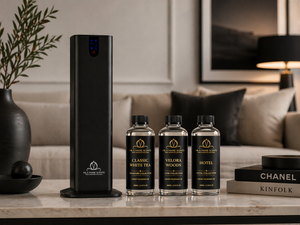
For a clean hotel-style feel, Classic White Tea can sit beside a citrus-led fragrance because its profile feels softer than a heavy wood. Escape, with its sandalwood base, may suit a room where you want a smoother, more dressed finish. Keep the test small until you know how the notes behave together.
People smell a scent through changing attention, not through a perfect meter. The sense of smell detects airborne molecules, so air movement and distance affect the result.
Use a bridge when it solves a clear problem. If it only makes the blend sound more complex, leave it out.
Step 4: Match the Scent Strength to the Room and Guest Experience
Match diffuser strength to room size, airflow, and how long guests will stay. A small bedroom needs less output than an open living room.
For a smaller room, start with the lowest useful setting and a short run. Keep the diffuser away from the spot where guests sit or sleep. A nearby stream of scent feels much stronger than the same output across a larger room.
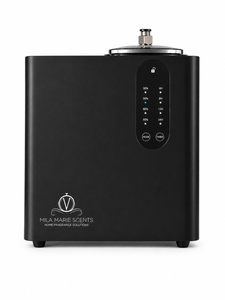
The Mila Marie Scents ECHO Mini is listed for spaces up to 700 square feet and includes Bluetooth intensity control. That control lets you lower the output when the room feels full, then raise it slightly when open doors or airflow weaken the scent. The point is control, not maximum output.
PULSE is listed with coverage up to 1,800 square feet. That makes room placement more important in an open plan. Begin near the edge of the main area, not beside the dining table. In a small office, Elite Mini Pro may suit a cordless setup where a tower form fits the room better.
Use the guest experience as your test. Guests should notice a clean atmosphere when they enter. They shouldn't need to ask what fragrance you're using before they take off their coat. Food also changes the test. Keep scent lighter near kitchens and dining areas, where heavy wood or sharp citrus can compete with a meal.
Living rooms are usually the safest starting point because they give scent more air to spread. Bedrooms need a softer setting. Offices need restraint because people may sit in the same scented air for hours.
For a bedroom-specific setup, Mila Marie Scents also explains how to choose a heat-free cold-air diffuser for bedroom use. Set the output before guests arrive, then leave the controls alone during the first visit.
Step 5: Test, Adjust, and Stop Before the Scent Takes Over
Test the blend in the real room, then stop before the scent becomes the main event. Short diffusion runs are easier to manage than long ones.
Start with less than 30 minutes per day. Run the diffuser before guests arrive, then allow the room to settle. Walk out for several minutes and return. This matters because your nose can adapt while you stay in the room.
Ask three simple questions:
- Can I still smell the room itself?
- Does the citrus arrive before the wood?
- Would this feel comfortable after an hour?
If the answer to the last question is no, lower intensity first. If the citrus disappears, raise the citrus share before raising total output. If the wood feels thick, reduce the wood share or choose a lighter wood.
Test with the door open if guests will move through nearby spaces. Test with the door closed if the room will hold the scent. Note the time of day because heat and airflow can change how quickly the room fills.
Cold-air diffusion is useful for this kind of work because it does not rely on heated water. Mila Marie Scents sells heat-free cold-air diffusers with curated fragrance oils, including ECHO Mini and PULSE. The ECHO Mini cold-air diffuser gives you a compact option when you want app control for a bedroom, office, or smaller living space.
Don't chase a scent you can smell from every doorway. A guest-friendly room has a scent boundary. Once the blend feels present but quiet, save the setting and stop adjusting.
For a final check, ask someone who has not been in the room during testing to walk in. Their first reaction is more useful than your tenth adjustment.
Frequently Asked Questions
What is a heat free cold air diffuser?
A heat-free cold-air diffuser spreads fragrance without heating water or the oil. It is useful when you want measured scent output and a clean setup. Mila Marie Scents uses this format in products such as ECHO Mini and PULSE. To pair citrus and woody notes without overpowering guests, start at low intensity and use short runs.
What ratio should I use for citrus and woody fragrance oils?
Start with 75% citrus and 25% wood for a bright, balanced room scent. Reverse the ratio when you want the wood to lead. When learning how to pair citrus and woody notes without overpowering guests, test the pair before adding a third note. Change one part at a time.
Can I mix and match fragrance oils?
Yes, you can mix and match fragrance oils when both oils are made for the same diffuser format. Begin with two compatible notes, then test a small amount. Keep the first blend simple. Bergamot with sandalwood or orange with cedarwood gives you a clear starting point for guest-friendly scent.
How long should I run a diffuser before guests arrive?
Start with less than 30 minutes per day, then check the room from outside. The best timing depends on room size, airflow, and diffuser output. If the scent is clear at the door, stop. More run time won't always make the blend feel more refined.
Is there a luxury fragrance oil sample pack to try before buying?
Yes, Mila Marie Scents has a sample pack designed for trying multiple luxury fragrance oils before choosing a full bottle. A sample helps you compare citrus, wood, and blended profiles in your own room. That is the safest way to find a scent that suits your home and guest routine.
Conclusion
Choose one bright citrus and one grounding wood, begin at 75:25, and keep diffusion below 30 minutes while you test. For more control, use the Mila Marie Scents ECHO Mini and adjust intensity from the room's actual response. Make one small blend, test it before guests arrive, and save the setting once the scent feels present but quiet.
Best-selling diffusers & fragrances for your home
Which Diffuser Is Right for You?
| Feature | INFINITY | HALO Tower |
|---|---|---|
| Price | $399.00 | $229.00 |
| Coverage | Up to 16,000 sq ft | Up to 4,000 sq ft |
| Type | HVAC / Whole-Home | Floor Standing |
| App Control | Yes (Bluetooth) | Yes (Bluetooth) |
| Free Oils Included | Yes (3 Oils) | Yes (3 Oils) |
| Warranty | 1-Year | 1-Year |
| Guarantee | 30-Day | 30-Day |
Swipe to compare →
Get 10% Off Your First Order
Join the Mila Marie family for early access to new fragrances, exclusive offers, and expert scenting tips.