How to Match Scent Notes to Vintage Interiors
Vintage cabins suit earthy, cozy aromas. Mid-century rooms need warm woods, leather, and a hint of smoke. To match scent notes to vintage or mid-century interiors, start with the room’s materials, then choose a scent family that supports its mood. A heat-free diffuser gives you the control to test that choice without adding flame or visual clutter.
Step 1: Identify the Interior’s Era, Materials, and Mood
The best scent match starts with the room’s strongest visual cues, not with a fragrance bottle. Look at the furniture, wall color, wood tone, and amount of natural light.
Write down three words that describe the space. Try “warm, collected, quiet” for a vintage room. For a mid-century living room, “polished, grounded, social” may fit better.
Then mark the main materials:
- Walnut, teak, or brass: lean toward leather, tobacco, amber, or dry woods.
- Old wood, wool, or textured blankets: consider patchouli, vetiver, cedarwood, or sandalwood.
- Leather seating: choose a warm, slightly smoky note instead of bright laundry or sharp aquatic scents.
- Light wood and open space: use a cleaner wood profile with a restrained output.
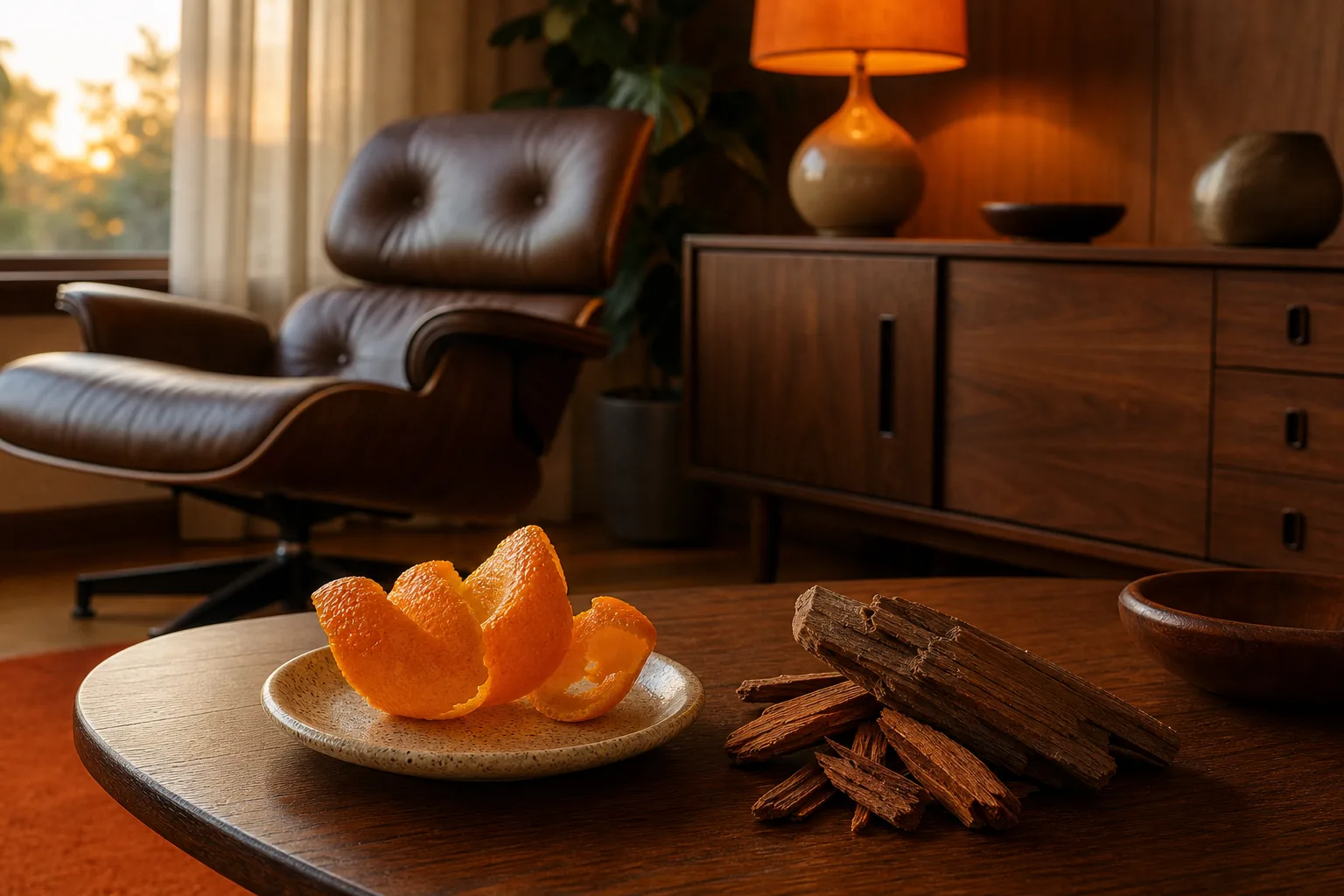
Mid-century design is tied to clean lines, functional furniture, and materials such as wood and leather. That makes a warm, low-slung scent feel more at home than a sweet tropical blend. Mid-century modern design emphasizes function and simple form.
Vintage rooms need a little more softness. Patchouli, amber, vetiver, cedarwood, and sandalwood pair well with wooden coffee tables, neutral blankets, and faux fur pillows. These notes bring out the room’s age without making it smell dusty.
If your room mixes styles, scent the smaller area you use most. A reading nook can take a warmer fragrance than the open hall beside it. For a mid-century room with a vintage cabinet, let the main furniture decide, then use one shared wood note to connect both pieces.
For a teak-heavy room, French Riviera gives you a useful direction: peonies, jasmine, cashmere musk, and spiced amber. Treat the room as the brief. The fragrance should follow its mood, not fight it.

Step 2: Translate the Room Palette Into Compatible Scent Families
To match scent notes to vintage or mid-century interiors, translate color and texture into a scent family before choosing a named fragrance. This keeps the choice focused.
Think of scent families as broad directions, not strict rules. The research set used for this topic contains many different families, with no single family appearing often enough to control every pairing. That gives you room to work with the actual home in front of you.
For vintage rooms, start earthy
Vintage interiors often feel layered and lived-in. Earthy notes support that feeling without copying the smell of old fabric or wood. Patchouli brings depth. Vetiver feels dry and green. Cedarwood and sandalwood add a clean wood base.
Amber is useful when the space needs more warmth. It softens hard wood and makes a cabin-style room feel inviting. Use it with a light hand in a small room, since warmth can build quickly when air movement is low.
Some vintage rooms call for a softer profile. The entries labeled NO. 3814 and NO. 3901 are described as warm, inviting, soft, and pillowy. That direction suits a room with faded textiles, curved furniture, and low evening light.
For mid-century rooms, echo the furniture
Leather and tobacco are strong starting points for walnut and teak. Leather brings the tactile feel of a low chair or worn sofa. Tobacco adds a warm, slightly smoky edge that works well in a den or music room.
Amber can bridge the two. It connects leather to wood while keeping the room from feeling too sharp. If the room already has dark furniture, choose a lighter output before you change the scent family.
Bright green or aquatic notes can work in a sunlit mid-century room, but they need care. A heavy fresh-linen profile may feel out of place beside walnut. A small green lift can work when the room has plants or pale upholstery.
For a room that needs a warmer wood direction, Cascade combines violet, iris, cardamom, cedar, leather, papyrus, sandalwood, and amber. Use that kind of layered profile when the room has several materials competing for attention. Keep the diffuser output low until you know which note arrives first.
Use this quick test: if the room feels soft, choose an earthy or amber base. If it feels sleek, choose wood with leather or tobacco. If it feels bright, add one clean green note instead of changing the whole scent direction.
Step 3: Build a Three-Part Scent Story Without Overloading the Room
A three-part scent story has an opening note, a middle note, and a lasting base. For vintage or mid-century rooms, keep the base tied to the furniture.
Start with one role for each part:
- Opening: gives the first impression when someone enters.
- Middle: carries the room’s main mood after the first few minutes.
- Base: stays close to the room’s materials and gives the scent weight.
For a mid-century living room, the story might open with a restrained citrus note. Leather or tobacco can carry the middle. Cedarwood, sandalwood, or amber can form the base.
For a vintage cabin, begin with a soft green or dry wood note. Move into patchouli or vetiver. Let cedarwood, sandalwood, or amber sit underneath.
You don’t need three separate oils. One fragrance oil may already contain several note roles. The point is to understand what each part is doing before you increase the scent level.
Keep adjacent rooms connected with one shared note. Cedar in the hall can link to amber and leather in the living room. Sandalwood can connect a vintage bedroom to a mid-century study.
When you want to compare several directions, a luxury fragrance oil sample pack lets you test small scent choices before committing to one room profile. Test each sample on a separate day. Your nose adapts fast, and back-to-back comparisons can blur the difference.
Step 4: Match the Fragrance and Diffuser to the Room Size
Room size changes how much scent you notice. A small closed room needs less output, while a large open room may need a stronger base and better air movement.
Start by measuring the active room, not the whole floor. Then note the ceiling height, open doorways, HVAC vents, and windows. A 100-square-foot study behaves very differently from a 400-square-foot open living room.
Use the room as your guide
- Small rooms: begin with a middle-note scent and the lowest useful setting.
- Open living areas: choose a base with wood, amber, or another lasting note.
- Rooms with strong airflow: place the diffuser where air can carry scent across the room.
- Bedrooms and reading areas: keep the output softer than the main living zone.
Heat-free cold-air diffusion works well when you want scent without a flame. Mila Marie Scents offers the Cold-Air Diffuser Bundle for homes and small offices, with long-lasting fragrance oil and even scent coverage. The system gives you a neutral base while the oil supplies the room’s character.
For smaller areas, consider the ECHO Mini or Elite Mini Pro. For a larger home zone, PULSE or INFINITY may be the better starting point, depending on the coverage needs of your space. Elite Car Pro is made for a vehicle setting, so keep it separate from your home scent plan.
Place the diffuser away from the exact spot where guests sit. A nearby stream always feels stronger than the same output spread across a room. Start low, leave the room for several minutes, then return through the entry point.
In an open-plan home, scent the main zone first. Don’t add a second unit until you know the first one cannot reach the rest of the space. This avoids a patchy result and makes oil use easier to track.
For a direct comparison between private and social spaces, use Mila Marie Scents’ guide to choosing scent strength for bedrooms versus living rooms. The useful rule is simple: size the diffuser first, then set the fragrance level from the room’s response.
One caution matters here. Don’t judge strength while standing beside the diffuser. Judge it where you enter, sit, or sleep. That is where the scent needs to feel balanced.
Step 5: Test, Adjust, and Create a Consistent Signature Scent
The final step is a short room test. Test one fragrance in its real setting before you commit to a full scent plan.
Begin with the lowest useful output. Run the diffuser for a short period, then leave the room. Return through the same doorway after several minutes and note your first impression.
Ask four questions:
- Can you still smell the room’s natural materials?
- Does the scent fit the furniture, or does it feel placed on top?
- Is the base too heavy after an hour?
- Would a guest find the scent pleasant without asking for more?
Keep a small test note beside the diffuser. Record the oil, setting, run time, room conditions, and first reaction. Change one variable at a time. If the scent feels heavy, lower output before changing the oil.
Your nose can stop noticing a steady scent after repeated exposure. This effect is called olfactory fatigue, and it can make a fragrance seem to fade even while others still notice it.
Ask someone who has not been in the room during testing to enter. Their first reaction is more useful than your tenth adjustment. If they notice the scent from the hall, reduce the setting or move the diffuser farther from the doorway.
For a bright room that needs a wood anchor, use one citrus note with one grounding wood. Test the combination at low intensity. That keeps the opening clear while giving the room enough depth.
Keep one main signature scent in the entry and living area. Let private rooms use a softer variation rather than a completely unrelated profile. For example, a mid-century living room can use leather and amber, while a nearby bedroom shifts toward soft musk or sandalwood.
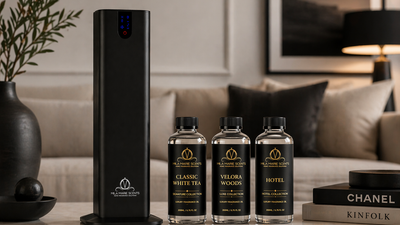
Luxuré Harmony, White Tea, and Velora Woods can help you explore different directions within the Mila Marie Scents range. Use White Tea when the room needs a lighter, cleaner feel. Use Velora Woods when the wood deserves more attention. Keep each diffuser to one oil unless its directions say otherwise.
Frequently Asked Questions
What scent notes work best in a mid-century home?
Leather, tobacco, amber, cedarwood, and sandalwood usually suit a mid-century home best. These notes echo walnut, teak, brass, and leather furniture. Start with one warm note, then add a softer wood or amber base. Keep bright aquatic scents light, especially in darker rooms where they may feel disconnected.
What scents suit a vintage cabin interior?
Patchouli, amber, vetiver, cedarwood, and sandalwood suit vintage cabin interiors well. They support wood furniture, wool textures, and a cozy mood. Start with cedarwood or vetiver if you want a dry profile. Choose amber or patchouli when the room needs more warmth.
What is a heat free cold air diffuser?
A heat free cold air diffuser spreads fragrance oil without heating it or adding water. This makes it useful when you want steady scent with no flame. Mila Marie Scents uses cold-air diffusion across its home fragrance system, including the Cold-Air Diffuser Bundle and named diffuser options such as ECHO Mini and PULSE.
How do I mix and match fragrance oils between rooms?
Mix and match fragrance oils by sharing one note between nearby rooms. Cedar can connect a living room with a hall. Sandalwood can link a bedroom to a study. Use one oil per diffuser unless the product directions allow blending, and keep private rooms softer than social spaces.
Can I try before I buy home fragrance?
Yes, you can try before you buy home fragrance with a sample set. Mila Marie Scents has a luxury fragrance oil sample pack for testing several profiles before choosing a larger oil. Test one scent per day in the room where you plan to use it. That gives each fragrance a fair read.
Conclusion
Start with the room’s strongest material, choose one scent family, and test at low output. For a flexible heat-free setup, Mila Marie Scents is the sensible place to begin, especially with its Cold-Air Diffuser Bundle. Order a sample pack first, test your favorite note in the real room, then save the setting that feels present without taking over.
Best-selling diffusers & fragrances for your home

Which Diffuser Is Right for You?
| Feature | INFINITY | HALO Tower |
|---|---|---|
| Price | $399.00 | $229.00 |
| Coverage | Up to 16,000 sq ft | Up to 4,000 sq ft |
| Type | HVAC / Whole-Home | Floor Standing |
| App Control | Yes (Bluetooth) | Yes (Bluetooth) |
| Free Oils Included | Yes (3 Oils) | Yes (3 Oils) |
| Warranty | 1-Year | 1-Year |
| Guarantee | 30-Day | 30-Day |
Swipe to compare →
Get 15% Off Your First Order
Join the Mila Marie family for early access to new fragrances, exclusive offers, and expert scenting tips.