
How to Match Home Fragrance Notes to Color Palettes
Your interior color palette sets the mood before anyone says a word. The right fragrance note locks that mood in place. This guide walks you through five clear steps to match scent to color so every room feels intentional, not accidental, and shows you exactly how a 5-Star Luxury Hotel Bundle from Mila Marie Scents can anchor the whole system.
Step 1: Identify Your Space and Desired Mood
Before you pick a single scent note, get clear on two things: which room you're working with, and what feeling you want someone to have the moment they walk in. These two answers drive every decision that follows.
Start by standing in the room and asking yourself what the color palette is already doing. A cool-toned room with pale grays and crisp whites signals clarity and calm. A warm-toned room with terracotta, ochre, or deep cream signals comfort and intimacy. A neutral space sits open to either direction.
Then name the mood you want. "Welcoming" is different from "calming." "Refreshing" is different from "enveloping." Research across 26 fragrance notes consistently shows that mood descriptors cluster into two dominant themes:enveloping and comfortingfor warm spaces, andrefreshingfor bright or neutral ones. Knowing which camp your room falls into saves you from buying a scent that fights the walls.
Write it down. Literally. "Bedroom, cool palette, calming mood" or "Entryway, neutral white, welcoming mood." That single line becomes your filter for every step ahead. Rooms with mixed palettes, say a warm wood floor under cool-gray walls, can layer two complementary notes rather than forcing one to do all the work.
One usable note: consider the room's size. A small entryway needs a lighter diffusion than an open-plan living area. Mila Marie Scents cold-air diffusers are heat-free, which means the oil isn't burned off unevenly. The scent disperses at a consistent rate, so you're not fighting hot spots or dead zones as you match notes to the space.
Step 2: Choose a Fragrance Family That Mirrors the Color Temperature
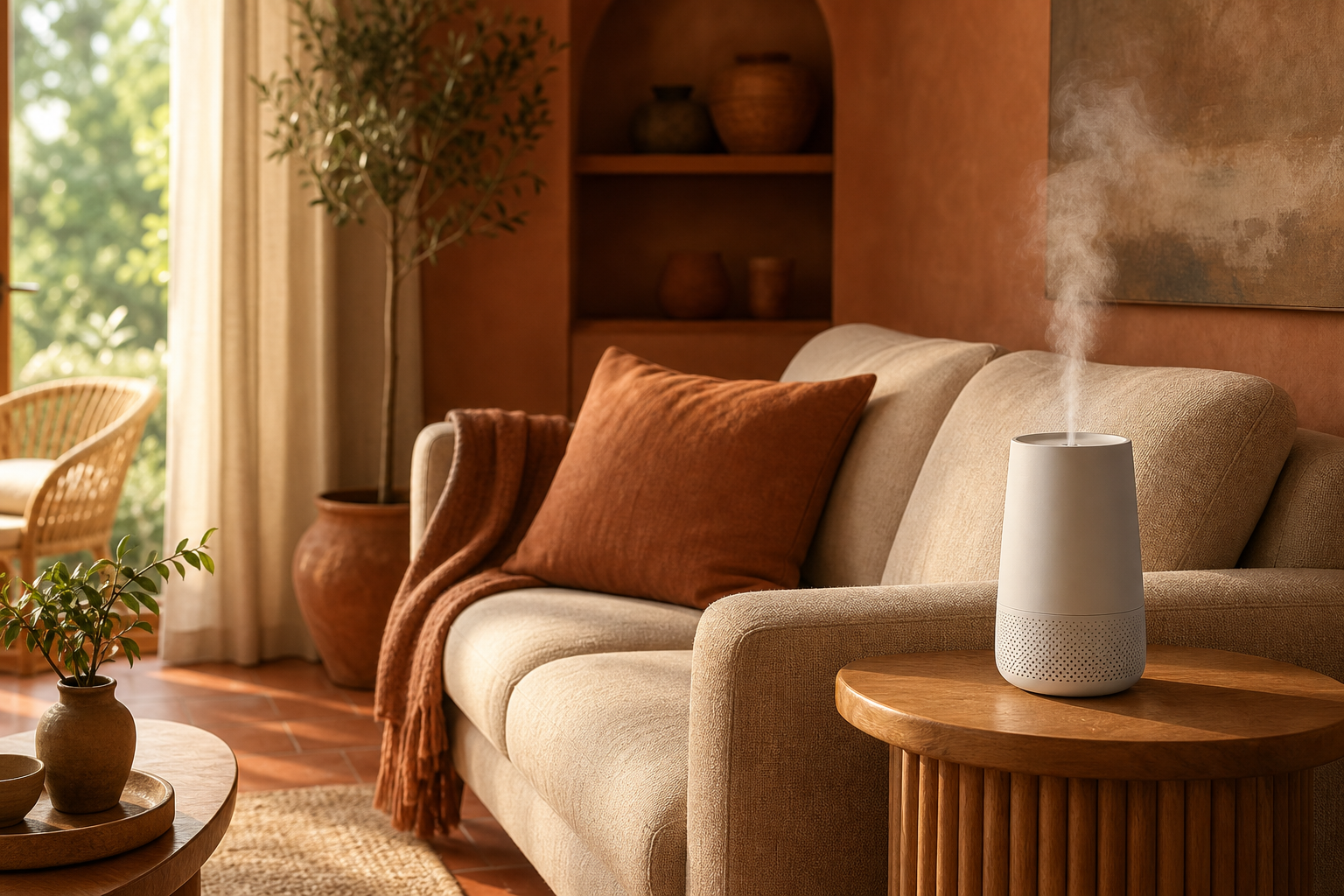
Color temperature in lighting and color temperature in paint share the same logic. Warm tones, think amber walls, honey wood, rust, and deep cream, pair with warm fragrance families. Cool tones, think white, sage, slate, and pale blue, pair with fresh or green fragrance families. The rule is simple: mirror the temperature, don't fight it.
Here's how the main fragrance families map to interior palettes, drawn from research across design and fragrance sources:
- Warm/Amber palettes (terracotta, ochre, deep cream):Soft woods, vanilla, and amber notes. These scents feel enveloping and comforting, exactly what a warm-toned room promises visually.
- Neutral/White palettes (crisp white, light gray, natural linen):Citrus and herbal notes. Both carry a welcoming, clean energy that matches the openness of a neutral space.
- Cool/Green palettes (sage, slate, pale blue, forest green):Fresh green, eucalyptus, and mint. These notes reinforce the refreshing quality already built into the color scheme.
- Deep/Vintage palettes (jewel tones, dark wood, antique finishes):Oriental and woody notes. These read as warm and mature, holding their own against rich, saturated color.
The science behind this connects to how olfaction and ambient environment interact: warm light activates a psychological sense of intimacy, which primes the brain to receive warmer, richer scent notes more favorably. Cool, bright light does the opposite, making fresh and green notes feel more congruent.
If you're not sure where your room lands, check your light bulb packaging. A 2700K bulb is warm-white. A 4000K or 5000K bulb is neutral to cool. That number tells you as much about your scent pairing as your paint chip does.
Step 3: Pair Specific Scent Notes with Paint Shades
Now you get specific. You have your room, your mood, and your fragrance family. This step maps individual scent notes to actual paint shades so the pairing feels deliberate rather than approximate.
Use this as your working reference:
A few pairings worth calling out specifically. Lavender is the only note in the research data labeled "calming," which makes it genuinely distinct for bedrooms painted in cool tones. Don't use it in your entryway just because you like the smell. Context matters. The entryway belongs to citrus and herbal notes because those read as welcoming at first contact, not as an invitation to sleep.
For living rooms, the Luxe Gold fragrance from Mila Marie Scents brings together citrus, floral, and woody notes in a single oil, which works especially well in warm-toned spaces where you want depth without heaviness. It's a good choice for rooms that blend warm and neutral tones and need a scent that bridges both.
Kitchens are the most scented room in most homes, yet they're also the trickiest. Fresh green, eucalyptus, and mint all read as refreshing and clean against neutral-white or stainless palettes. But avoid heavy oriental or vanilla notes in a kitchen. Against cool, functional surfaces, those scents feel out of place, almost cloying.
Step 4: Test with Sample Packs and Optimize Diffuser Placement
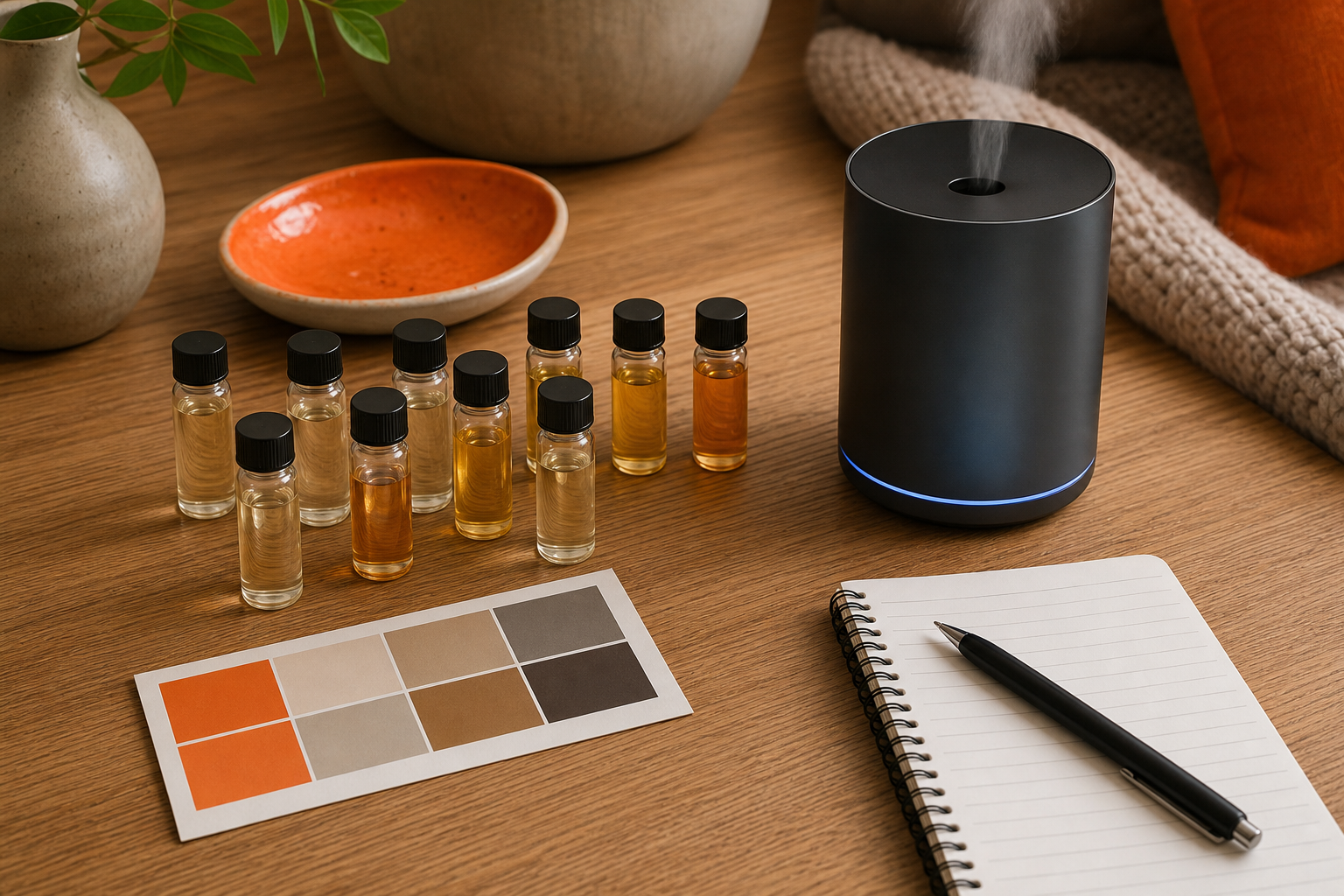
Never commit to a full bottle before you test in the actual room. Scent behaves differently depending on room size, ventilation, and the materials in the space. A note that smells perfect in a small sample vial can feel overpowering in a low-ceilinged bedroom or disappear in an open-plan living area.
Mila Marie Scents offers fragrance oil sample packs specifically for this reason. Try before you buy home fragrance is the right approach, and it's one of the most common buyer-intent questions people ask before purchasing a cold-air diffuser bundle. A sample pack lets you run each note in the actual room for a few days before deciding.
Once you've confirmed the right note, placement is the next variable. Cold-air diffusers work by pushing scented micro-particles through the air without heat, so airflow in the room determines coverage. Follow these placement principles:
- Place the diffuser at a mid-height surface, around 3 to 4 feet off the ground. Too low and the scent pools near the floor. Too high and it dissipates before reaching breathing level.
- Keep it away from direct air vents. HVAC airflow can scatter the scent unevenly or push it out of the room entirely. Speaking of HVAC, if you're planning a full home-comfort upgrade, pairing a quality fragrance system with proper climate control makes a real difference in how scent is perceived. A resource like this guide on HVAC financing options for homeowners can help if you're considering that kind of investment alongside your fragrance setup.
- In rectangular rooms, place the diffuser at one-third of the room's length from the wall, not in a corner. Corners trap scent rather than circulate it.
- For open-plan spaces over 400 square feet, consider two diffusers placed at opposite ends rather than one unit working too hard from the center.
Run each test note for at least 48 hours before making a judgment. Your nose adapts to a scent within the first few hours, so your honest read comes on day two when you walk back into the room fresh.
Step 5: Finalize Your Bundle and Keep the Palette Balanced
You've tested, you've placed, you know what works. Now you build a system that stays consistent without requiring constant adjustment. This is where a curated bundle pays off over buying individual bottles at random.
A cold-air diffuser bundle pairs the hardware with a set of fragrance oils chosen to complement each other. Mila Marie Scents bundles are designed this way: the diffuser and the oils are matched so you're not mixing a luxury diffuser with a drugstore oil and wondering why the result feels off. The Hotel Collection is a good reference point here. It includes nine scents built around the crisp, layered quality of five-star hotel lobbies, which tend to use warm-neutral palettes with soft lighting, exactly the 2700K sweet spot the research data points to.
To keep the palette balanced across multiple rooms, follow one rule: pick a scent family for the whole home, then vary the specific notes by room. A home with warm-neutral tones throughout might use vanilla in the living room, lavender in the bedroom, and a citrus-herbal blend in the entryway. Same family. Different notes. The transitions feel natural rather than jarring.
Avoid using more than two distinct fragrance families in one home. Three or more competing families create olfactory noise, and guests notice it even if they can't name why the space feels unsettled. Think of it the way an interior designer thinks about color: you'd pick a palette and stick to it, not use every color in the wheel.
For anyone interested in how sensory layering extends beyond scent, pairing fragrance families with complementary decor elements like crystals or natural materials can reinforce the mood you've built. The connection between crystal energy and ambient design is worth exploring if you're building a fully cohesive sensory space.
If your home is large or spans multiple floors, check the guide to whole-home fragrance systems on the Mila Marie Scents blog. It covers diffuser placement for larger square footage, which follows different rules than a single-room setup.
Finally, schedule a reassessment every season. Scent perception shifts with temperature and humidity. A note that felt perfect in January may read differently in July. A quick swap of one oil in your bundle keeps the palette feeling current without overhauling the whole system.
FAQ
What fragrance notes work best with white or neutral walls?
Citrus and herbal notes pair best with white and neutral palettes. These scents carry a clean, welcoming quality that mirrors the openness of a neutral space. For entryways especially, a citrus-forward oil sets the right first impression without competing with the room's understated color scheme. Avoid heavy oriental or amber notes in all-white rooms, as they can feel mismatched against the visual lightness.
Can I mix and match fragrance oils from different scent families?
Yes, but limit yourself to two complementary families. Mixing and matching fragrance oils works well when the notes share a temperature, for example, a woody base with a citrus top note both read as warm-adjacent. Combining three or more unrelated families creates scent confusion. Mila Marie Scents oils are formulated to layer cleanly, so pairing two from the same collection is a safe starting point.
How does lighting temperature affect how a home fragrance smells?
Lighting temperature changes how your brain processes scent. Warm-white light around 2700K primes the mind for warmth and intimacy, making richer, deeper notes like vanilla and amber feel more congruent. Cool light at 4000K or higher suits fresh, green, and citrus notes. Research across 26 fragrance notes found that all entries with a recommended palette pointed to warm-white lighting, making it the single most consistent design variable in scent pairing.
What is a heat-free cold-air diffuser and why does it matter for fragrance?
A heat-free cold-air diffuser disperses fragrance oil as a fine mist without burning or heating the oil. This matters because heat changes the molecular structure of fragrance compounds, altering the scent profile and reducing longevity. Cold-air diffusion preserves the oil's full note structure from top to base, so what you smell matches what was intended. It's also safer in homes with children or pets because there's no open heat source involved.
How do I choose between a single fragrance oil and a luxury bundle?
A luxury fragrance oil sample pack is the right first step if you're unsure which note fits your space. Once you've confirmed the right scent through testing, a cold-air diffuser bundle gives you the hardware and a curated set of oils that are already matched to work together. Bundles reduce guesswork and typically offer better value than buying individual bottles after the fact.
How often should I change fragrance oils when my interior palette changes seasonally?
Reassess your fragrance pairing at the start of each season. Warmer months favor lighter, fresher notes like citrus, mint, and eucalyptus. Cooler months suit deeper notes like amber, soft woods, and vanilla. If you repaint or restyle a room, treat it as a new pairing exercise from Step 1. Seasonal swaps within the same fragrance family keep the transition subtle and the overall home palette cohesive.
Conclusion
Matching fragrance to color is a five-step process: identify the mood, mirror the color temperature, pair specific notes to paint shades, test before committing, and build a balanced bundle. The research is clear that warm-white lighting at 2700K is the designer's anchor point, regardless of paint color. Start with the Matter fragrance oil if your space leans neutral and layered, or explore the Hotel Collection if you want a proven, hotel-style palette for your home. Pick one room, run the process, and let the result guide the rest of the house.
Best-selling diffusers & fragrances for your home
Which Diffuser Is Right for You?
| Feature | INFINITY | HALO Tower |
|---|---|---|
| Price | $399.00 | $229.00 |
| Coverage | Up to 16,000 sq ft | Up to 4,000 sq ft |
| Type | HVAC / Whole-Home | Floor Standing |
| App Control | Yes (Bluetooth) | Yes (Bluetooth) |
| Free Oils Included | Yes (3 Oils) | Yes (3 Oils) |
| Warranty | 1-Year | 1-Year |
| Guarantee | 30-Day | 30-Day |
Swipe to compare →
Get 15% Off Your First Order
Join the Mila Marie family for early access to new fragrances, exclusive offers, and expert scenting tips.