How to Create a Spa-Like Bathroom Aroma Without Candles
Candles are the default bathroom fragrance fix, but they bring open flames, soot, and real fire risk into a small enclosed space. You can get a richer, more consistent spa scent without any of that. This guide walks you through exactly how, using a heat-free cold-air diffuser and the right fragrance oils to make your bathroom smell like a five-star retreat every single day.
Step 1: Choose a Heat‑Free Cold‑Air Diffuser
The diffuser type you choose decides everything else. Get this wrong and you'll spend more time cleaning equipment than enjoying your bathroom.
Most people reach for an ultrasonic diffuser because they're everywhere. They work by vibrating water to create a cool mist. They're fine, but they come with a catch: you have to change the water tank every few days, scrub the reservoir weekly to prevent mold, and the mist can add humidity to an already-damp bathroom. In a small, enclosed space with poor ventilation, that extra moisture matters.
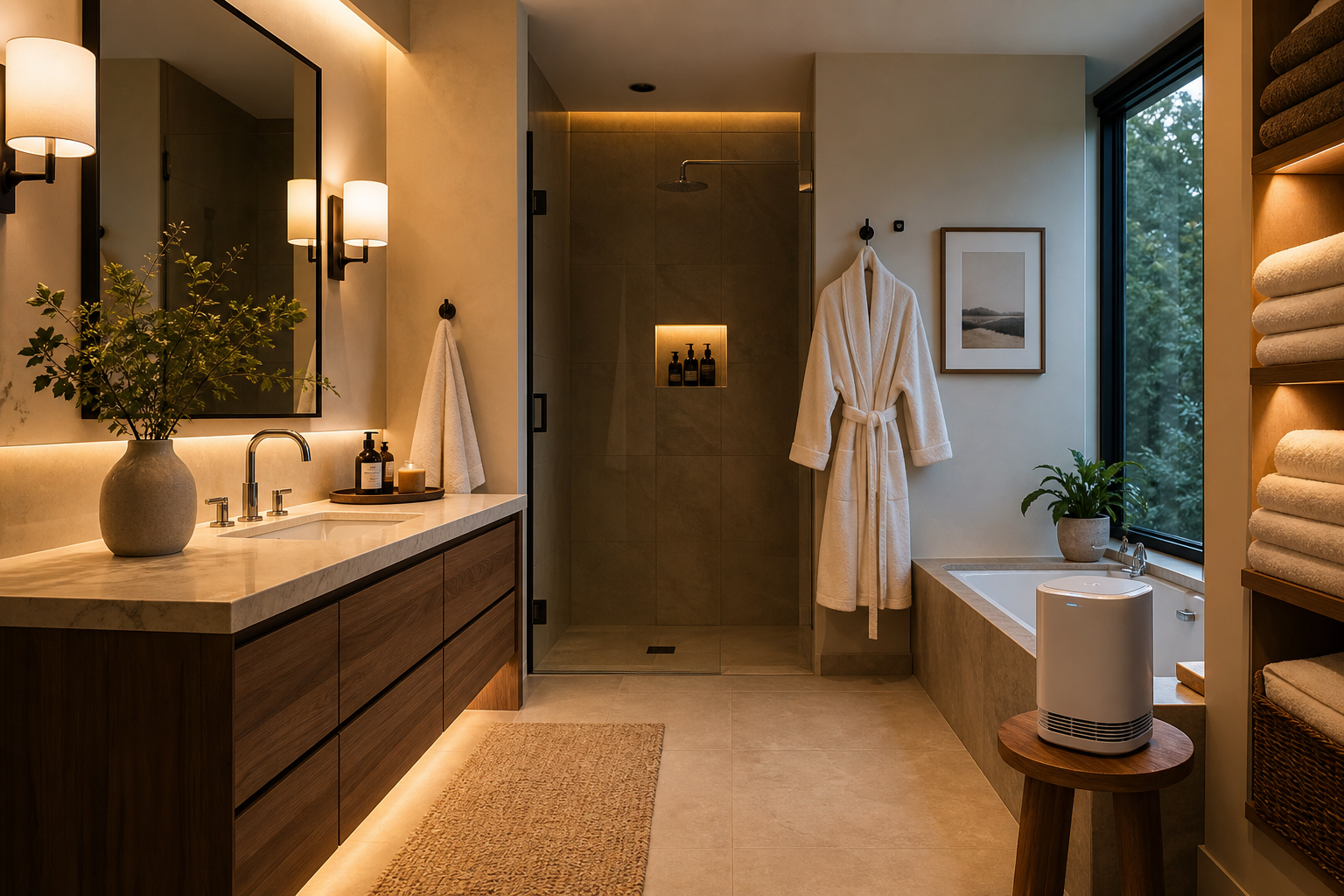
A cold-air diffuser takes a different approach entirely. It forces compressed air through a nozzle to atomize pure fragrance oil into a dry, invisible mist. No heat. No water. No residue on your tiles or mirror. The scent molecule stays suspended in the air longer, which means you get more even coverage from fewer drops of oil.
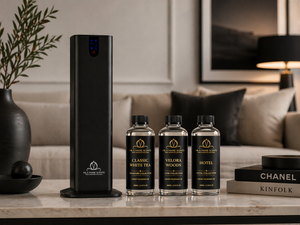
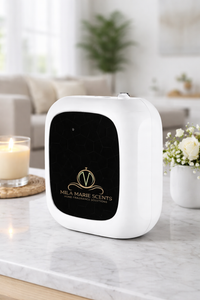
This is exactly what the Mila Marie Scents Starter Kit with the ECHO diffuser and three luxury oils is built for. The ECHO Mini covers up to 700 sq ft, which is well beyond any bathroom you're likely to have. It runs heat-free, leaves no sticky surfaces, and requires no water tank to maintain. For families with kids or pets, that heat-free operation is a genuine safety win, not just a marketing point.
If you want to compare delivery methods before committing, the table below lays out the key differences between the main diffuser types for bathroom use.
One honest caveat: cold-air diffusers use pure fragrance oil, so they go through oil faster than ultrasonic models that dilute with water. Plan to stock a small supply of your chosen oil. The payoff is that you're getting undiluted scent, which means the aroma is noticeably richer.
Step 2: Pick Luxury Spa‑Inspired Fragrance Oils
The diffuser is the delivery system. The oil is the actual experience. Choosing the wrong scent for a bathroom is easy to do, so here's how to think about it.
Spa environments lean on a narrow range of scent families: clean aquatics, soft florals, earthy woods, and fresh greens. They avoid anything heavy or sweet, because those notes feel oppressive in a small room. Think eucalyptus, white tea, cedar, and light citrus rather than vanilla or amber.
Essential oils are highly concentrated plant extracts, and when diffused, the molecules travel directly to the brain's limbic system, which controls mood and memory. That's why the right scent can shift how a bathroom feels within minutes. Aromatherapy's documented effect on the limbic system is the reason hotels invest so heavily in signature scents rather than just keeping spaces clean.
For a spa-like bathroom aroma without candles, these scent profiles work best:
- Eucalyptus or white teafor a clean, airy, morning-shower feel
- Lavender or chamomilefor an evening soak that signals the brain to wind down
- Cedar or vetiverfor a grounded, warm note that reads as luxury without being heavy
- Light citrus (bergamot, yuzu)for a mood-lifting daytime scent that also neutralizes odors rather than masking them
Mila Marie Scents carries fragrance oils designed specifically for cold-air diffusion, including the Luxuré Harmony and White Tea profiles. These are formulated to work with the atomization method, so the scent throw is calibrated for even distribution rather than a concentrated burst near the device.
One thing worth knowing: not all fragrance oils are the same. Some cheaper oils contain synthetic fillers that can degrade inside a cold-air diffuser's nozzle over time. Look for oils labeled for nebulizing or cold-air use. If you're new to this, a non-toxic diffuser guide can help you cross-reference oil quality with diffuser type before you buy.
Avoid mixing more than two scent families at once. A eucalyptus-and-cedar blend reads as polished. Eucalyptus, cedar, vanilla, and rose together reads as cluttered. Restraint is what separates a spa from a gift shop.
Step 3: Position Your Diffuser for Even Coverage
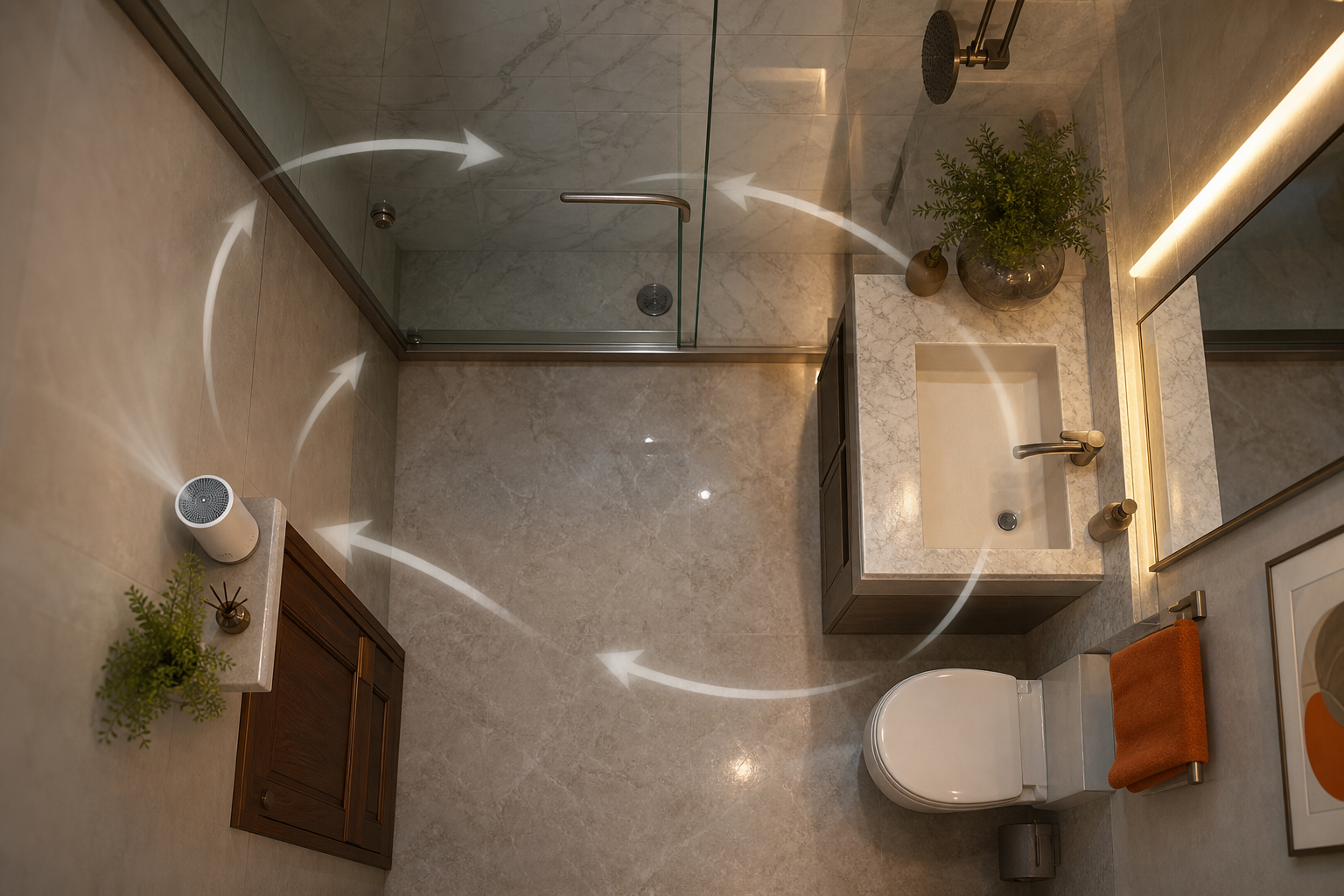
Where you put the diffuser changes how the scent moves through the room. A bad position means one corner smells great and the rest of the bathroom barely registers it.
The goal is to use the room's natural airflow rather than fight it. Bathrooms have exhaust fans, door gaps, and shower steam currents. Place your diffuser so the mist disperses into the room's air path, not directly at a wall or into a corner where it settles and concentrates.
A few placement rules that actually work:
- Place the diffuser at counter height or on a shelf, roughly 3 to 4 feet off the floor. Cold-air mist disperses horizontally, so a floor-level placement wastes most of the scent throw.
- Position it near the entrance side of the bathroom, not next to the shower. Shower steam can interfere with the atomization nozzle and cause oil to condense rather than disperse.
- Keep it at least 12 inches from any wall surface. The mist needs open air to spread before it hits a hard surface.
- If your bathroom has an exhaust fan, run the diffuser before you turn the fan on. Once the fan is running, it pulls air out of the room faster than the diffuser can replace it.
Coverage area data is sparse across most diffuser brands. Only a handful of products on the market explicitly state square-footage guidance, which makes Mila Marie Scents' clear room-size positioning genuinely useful. The ECHO Mini is rated for up to 700 sq ft, so even in a generous master bathroom you're well within range on a low intensity setting.
For larger bathrooms or open-plan wet rooms, the Halo Tower floor diffuser handles up to 4,000 sq ft and can connect to an HVAC system for whole-space coverage. That's overkill for most bathrooms, but useful if your spa bathroom opens into a connected dressing room or bedroom suite.
By the end of this step, you should have a specific spot picked out where the diffuser sits at counter height, away from the shower zone, with clear air around the nozzle on at least three sides.
Step 4: Set a Schedule and Compare Diffuser Options
Running a diffuser continuously wastes oil and can actually dull your sense of the scent. Your nose adapts to a constant smell within about 20 minutes, a process called olfactory fatigue. Intermittent diffusion keeps the scent feeling fresh every time you enter the room.
A simple schedule that works well for a bathroom: 20 minutes on, 40 minutes off. If your diffuser has a built-in timer (most cold-air models do), set it before your morning routine starts. The scent will be at its peak when you walk in and will cycle naturally through the day without burning through your oil supply.
The Stadler Form Jasmine, for reference, runs an interval mode of 10 minutes on and 20 minutes off for up to 24 hours. That's a reasonable baseline. But for a bathroom specifically, longer off-cycles work better because the room is small and the scent lingers after the diffuser stops.
Here's a quick comparison of the main diffuser types to help you decide which fits your bathroom and maintenance tolerance:
Cold-air diffusers sit at the top of this list for bathroom use because they combine heat-free operation with no water maintenance and a dry mist that doesn't add humidity to an already-damp room. That combination is harder to find than it sounds: across 34 diffuser products analyzed, only 20 were confirmed heat-free, and the cold-air category was the only one that eliminated both heat and water entirely.
If you're weighing a larger whole-home system that also covers your bathroom, the Infinity vs Aroma360 HVAC diffuser comparison breaks down how cold-air technology scales from a single room to an entire home without changing your core approach.
Step 5: Maintain & Refresh Your Spa Aroma
A spa doesn't smell great on day one and fade by week three. Consistency is what separates a real spa experience from a temporary fix. Maintenance is what keeps it consistent.
For a cold-air diffuser, the routine is minimal. Once a week, wipe the exterior with a dry cloth. Every two to three weeks, run a few drops of a neutral carrier oil (fractionated coconut oil works well) through the nozzle to clear any fragrance oil residue. That's it. No soaking, no scrubbing, no reservoir changes.
Compare that to an ultrasonic model like the Vitruvi Stone, which has two lids that make cleaning slightly awkward and needs its water reservoir changed every few days. In a bathroom where you're already managing towels, products, and humidity, low-maintenance equipment matters more than it might seem.
Refreshing your scent profile every few months also helps. Your nose adapts to a scent you smell daily, so rotating between two complementary oils keeps the experience feeling intentional. Try a clean white tea profile for weekday mornings and switch to a warmer cedar or vetiver blend on weekends. Both can run through the same diffuser with a quick nozzle wipe between oils.
Oil storage matters too. Fragrance compounds like limonene oxidize when exposed to light and heat, which degrades the scent over time. Store your fragrance oils in a cool, dark cabinet away from the bathroom window. A dark glass bottle with a tight cap keeps the oil stable for months.
Finally, watch your oil level. Running a cold-air diffuser dry can damage the nozzle. Most Mila Marie Scents diffusers have a low-oil indicator, but a quick visual check before each weekly wipe takes two seconds and prevents the one maintenance issue that actually costs money.
For anyone managing scent across multiple rooms, the desktop and floor diffuser collection at Mila Marie Scents covers every room size from a compact bathroom to an open-plan living space, all using the same cold-air technology and the same fragrance oils.
FAQ
Can I use essential oils in a cold-air diffuser for my bathroom?
Yes, but check the oil's viscosity first. Cold-air diffusers atomize pure oil through a nozzle, and very thick or resinous essential oils (like sandalwood or vetiver at full concentration) can clog it. Most clean spa-style oils, including eucalyptus, white tea, and lavender, work well. Mila Marie Scents fragrance oils are formulated specifically for cold-air diffusion, so they're a safe starting point.
How long does a fragrance oil last in a cold-air diffuser?
On a low-to-medium intensity setting with 20-minutes-on cycles, a 100ml bottle typically lasts three to six weeks in a small bathroom. Cold-air diffusers use undiluted oil, so they go through it faster than ultrasonic models that dilute with water. The trade-off is a noticeably richer, more consistent scent throw that doesn't fade as quickly between cycles.
Is a cold-air diffuser safe around kids and pets?
A heat-free cold-air diffuser is safer than a candle or a heated wax warmer because there's no flame or hot surface. That said, some essential oils are toxic to cats and dogs. Always check the specific oil before using it in a shared space. Mila Marie Scents diffusers produce no heat and no open flame, which removes the main physical safety risks for children.
What scent makes a bathroom smell like a spa?
Clean, light scent profiles work best: eucalyptus, white tea, bergamot, cedar, and light lavender. These are the profiles most luxury hotel spas use because they read as fresh and intentional without being heavy. Avoid sweet or gourmand notes (vanilla, caramel) in a small bathroom. They can feel overwhelming in an enclosed space, especially with residual shower steam.
Do I need to clean a cold-air diffuser more often than an ultrasonic one?
No. Cold-air diffusers actually need less cleaning than ultrasonic models. There's no water reservoir to change or scrub. A quick wipe of the nozzle with a neutral carrier oil every two to three weeks is all that's needed. Ultrasonic diffusers, by comparison, need weekly reservoir cleaning to prevent mold and mineral buildup from tap water.
Can a diffuser replace candles completely for bathroom fragrance?
Yes, and for most bathrooms it does the job better. A cold-air diffuser gives you consistent scent coverage, adjustable intensity, and a timer so the room smells exactly right when you walk in. Candles require supervision, leave soot on walls over time, and can't be left running unattended. For a spa-like bathroom aroma without candles, a quality diffuser is the usable long-term solution.
Ready to Make the Switch?
The fastest way to get a spa-like bathroom aroma without candles is to pair a heat-free cold-air diffuser with a clean, light fragrance oil and a simple 20-minutes-on schedule. Start with the Mila Marie Scents ECHO Starter Kit, pick a white tea or eucalyptus oil, and position it at counter height near the bathroom entrance. You'll notice the difference the first morning you walk in.
High-coverage diffusers for large spaces
Which Diffuser Is Right for You?
| Feature | HALO Tower | ECHO Mini |
|---|---|---|
| Price | $229.00 | $89.00 |
| Coverage | Up to 4,000 sq ft | Up to 700 sq ft |
| Type | Floor Standing | Desktop / Wireless |
| App Control | Yes (Bluetooth) | Yes (Bluetooth) |
| Free Oils Included | Yes (3 Oils) | Sold separately |
| Warranty | 1-Year | 1-Year |
| Guarantee | 30-Day | 30-Day |
Swipe to compare →
Get 15% Off Your First Order
Join the Mila Marie family for early access to new fragrances, exclusive offers, and expert scenting tips.