Are Diffusers Safe for Cats? Complete Safety Guide
Cat owners love a fresh‑scented home, but a diffuser can be a hidden danger. You might wonder if the mist that fills your living room could hurt your whiskered friend. In this guide we’ll break down how diffusers work, which oils are risky, safe habits you can adopt, and cat‑friendly scent options. By the end you’ll know exactly how to keep both your space and your cat safe.
How Diffusers Work: Mechanism and Emission Types
First, let’s see what a diffuser actually does. The device takes a tiny amount of fragrance oil and spreads it into the air. There are four main types:
- Reed diffusers , pads soak up oil and release scent passively.
- Heat diffusers , a plug‑in element warms the oil so it evaporates faster.
- Ultrasonic or nebulizing diffusers , a vibrating plate or high‑speed air stream turns oil into a fine mist.
- Cold‑air (heat‑free) diffusers , a fan pushes room air through a saturated pad, releasing scent without heat.
Cold‑air models are the only ones that avoid a hot surface, which can be a burn risk for curious cats. The fan‑driven method also means the oil stays in micro‑droplets rather than a hot vapor, reducing the chance of the oil splashing onto a paw.
"Diffused oils are very dangerous, as the oils are inhaled," says Dr. Murl Bailey, a veterinary professor.
When the mist leaves the unit it mixes with room air. The size of the droplets matters. Ultrasonic diffusers create particles that can settle on fur, while cold‑air units release larger droplets that tend to stay airborne and disperse more evenly.

Because cats have a highly sensitive sense of smell, even a faint whiff can trigger a reaction. Understanding the emission type helps you pick a model that minimizes risk.
Bottom line:Choose a cold‑air diffuser to reduce heat‑related risks and limit how much oil lands on your cat’s fur.
Essential Oils That Are Toxic to Cats
Not every oil is safe. Cats lack a liver enzyme that breaks down phenols, so certain oils can build up to toxic levels quickly. Below is a list of oils that veterinarians flag as dangerous.
When a cat inhales even a small amount of these oils, symptoms can appear fast: drooling, vomiting, wobbliness, rapid breathing, or even liver failure. The danger isn’t just inhalation; droplets can settle on fur, and a cat may ingest them while grooming.
The veterinary college at Texas A&M explains that “diffused oils are very dangerous, as the oils are inhaled” and highlights the same toxic list we show here (Texas A&M Vet Med).
Bottom line:Avoid the oils in the table entirely; even a brief whiff can make a cat seriously ill.
Safe Diffuser Practices for Cat Owners
Knowing which oils to avoid is half the battle. The other half is using the diffuser the right way. Follow these steps each time you turn on a device.
1. Position the unit wisely
Place the diffuser on a stable surface away from the cat’s favorite perch. A high shelf or a closed cabinet with a small vent works well. If the unit tips over, oil can spill and a cat might drink it.
2. Use low settings
Most cold‑air diffusers let you control intensity. Keep it on the lowest setting, especially in a small room. This reduces the concentration of any accidental mist.
3>Ventilate the space
Open a window or run a fan for a few minutes after diffusing. Fresh air helps clear any lingering particles that might settle on fur.
4. Limit exposure time
Run the diffuser for 15‑30 minutes, then turn it off for an hour. Cats can become desensitized, but short bursts keep the scent pleasant without overwhelming their noses.
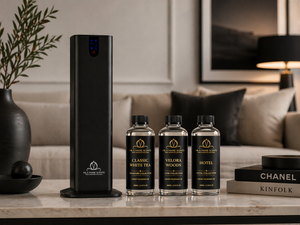
Our own cold‑air models follow these safety principles. Because there’s no heat, there’s no burn risk, and the fan spreads oil evenly, you get a calm scent without a hot surface that a curious cat could touch.
When you’re ready to add a fragrance, choose one that’s proven safe. The Mila's Way fragrance oil is formulated for our cold‑air diffusers and carries a pet‑safe label.
Bottom line:Position, low intensity, ventilation, and short sessions keep your cat safe while you enjoy a scented home.
Choosing Cat‑Friendly Essential Oils and Alternatives
If you still want a scent boost, pick oils that research shows are low‑risk. Lavender, chamomile, and cedarwood are often cited as gentle options when used sparingly.
Lavender can calm a stressed cat, but only a few drops in a large room. Chamomile has a soothing effect on the nervous system. Cedarwood can repel pests without harming pets. Always dilute to 1‑2 % in a cold‑air diffuser and monitor your cat’s reaction.
For a truly cat‑friendly alternative, consider fragrance‑free options like scented candles made from soy wax and natural herbs, just keep them away from the cat’s reach. You can also use our Dubai Night fragrance oil, which is crafted for cold‑air diffusers and carries a “Kid & Pet Safe” badge.
When you choose an oil, ask yourself:
- Is the oil listed as non‑toxic by veterinary sources?
- Can I keep the concentration low?
- Do I have a quiet, well‑ventilated area for diffusion?
For more detail on why these oils are safer, see the Wikipedia entry on essential oils ( Essential oil , Wikipedia).
Bottom line:Safe oils plus a heat‑free diffuser let you scent your home without endangering your feline companion.
FAQ
Are essential oil diffusers inherently unsafe for cats?
No. The risk depends on the diffuser type and the oil used. Heat‑based devices can cause burns if knocked over, while cold‑air diffusers avoid that hazard. The bigger danger is toxic oils; if you stick to cat‑safe oils and keep the device out of reach, diffusers can be used safely.
How long should I run a diffuser in a room with a cat?
Limit each session to 15‑30 minutes and then give the room an hour of fresh air. Short bursts keep the scent pleasant without overwhelming your cat’s sensitive nose.
Can I use a reed diffuser instead of an electronic one?
Reed diffusers release oil slowly through pads, so the concentration is low. However, the oil sits exposed and a cat could lick the reeds. If you choose this route, place the unit high and monitor for any licking.
What are the first signs of essential‑oil poisoning in a cat?
Watch for drooling, vomiting, trembling, wobbliness, rapid breathing, or a watery nose. If you see any of these, move the cat to fresh air immediately and call a vet. Early action can prevent serious damage.
Is there any benefit to using essential oils around cats?
Some low‑risk oils, like lavender, may have a calming effect when diffused at very low levels. Always test with a small amount and watch your cat’s behavior. If the cat seems uncomfortable, stop immediately.
Do cold‑air diffusers need any special maintenance?
They’re water‑less, so there’s no mineral build‑up. Just wipe the exterior with a dry cloth and replace the fragrance pad when the scent fades. This simplicity reduces the chance of spills that could attract a curious cat.
Conclusion
We’ve covered how diffusers work, which oils to avoid, safe habits, and cat‑friendly scent choices. The key is a heat‑free, cold‑air system paired with non‑toxic oils and mindful placement. When you follow those steps, you can enjoy a luxurious aroma without worrying about burns or poisoning.
Ready to explore a safe, upscale scent experience? Check out our best‑sellers collection for cold‑air diffusers and pet‑safe fragrance oils that fit right into the routine we’ve outlined.
Remember, a happy home smells good, and a happy cat stays healthy.
Best-selling diffusers & fragrances for your home