How to Pick Oils for Humid Bathrooms
High humidity can make a bathroom scent feel weak, flat, or too heavy. The best choice starts with the room, then moves to the scent family and diffuser. Mila Marie Scents recommends a balanced citrus, floral, and woody profile for steamy bathrooms because it feels fresh without losing depth.
Step 1: Assess Your Bathroom’s Humidity, Ventilation, and Size
Start by measuring the bathroom and checking how fast steam leaves after a shower. Room size and airflow affect how much fragrance you need and how long it stays noticeable.
Write down three details before you shop:
- Room size:Measure the length and width, then multiply them. A small powder room needs less scent than a large primary bath.
- Ventilation:Note whether you have an exhaust fan, a window, or both. Strong airflow can carry fragrance out quickly.
- Steam level:Watch the room after a normal shower. If mirrors stay fogged for a long time, treat the bathroom as a high-humidity space.
Humidity means the air contains more water vapor. Relative humidity compares that water vapor with the air’s maximum capacity at its current temperature. That level changes how a scent moves through the room.
Next, check where the diffuser will sit. Keep it away from direct splashes, the shower, and areas where towels may cover the vents. A shelf near the room entrance often gives better coverage than a damp corner beside the tub.
Almost every bathroom sits well inside the ECHO Mini’s rated coverage of up to 700 square feet, which makes it the honest Mila Marie Scents starting point at $89. It is cordless and runs on three D batteries, sold separately, so it does not need an outlet beside the sink. The larger units are sized for living space rather than bathrooms: the PULSE covers up to 1,800 square feet and the HALO Tower up to 4,000 square feet of open space, and either one would be oversized in a powder room. Coverage figures are manufacturer-stated, so treat them as a guide rather than a measurement.

Do not solve a ventilation problem with more fragrance. If damp air lingers, run the exhaust fan during the shower and for a short period afterward. A cleaner room gives any oil a fair chance to smell balanced.
Step 2: Choose a Scent Family That Stays Fresh in Damp Air
For humid bathrooms, fresh citrus, soft floral, clean tea, and light woody notes usually make the room feel clearer. Dense sweet or very smoky profiles can feel too thick when steam is already in the air.
Use the bathroom’s mood as your filter:
- For a clean spa feel:Try White Tea, linen, soft musk, or green tea. These notes feel polished without being sharp.
- For a bright morning room:Choose citrus, grapefruit, lemon, or bergamot. Citrus adds lift when the room feels close or stale.
- For more depth:Add a restrained woody note such as cedar, teakwood, or sandalwood. Keep the wood soft rather than smoky.
- For a floral room:Pick florals with green leaves, aloe, or tea notes. They feel fresher than a thick, sugary flower scent.
A clean scent collection built around linen, citrus, white tea, and coastal notes describes the same basic rule: the profile should feel open rather than crowded. A clean diffuser oil collection built around fresh notes can help you compare that style before choosing a bathroom blend.
Mila Marie Scents gives shoppers a useful starting point by identifying a citrus, floral, and woody family for its bathroom-suitable blend. That kind of label matters.
White Tea is a strong choice when you want a quiet hotel feel. Velora Woods brings more warmth with teakwood and sandalwood, plus citrus and spice notes. Escape leans cleaner again, with white tea, aloe vera, and sandalwood for a composed spa mood. Choose one profile at a time. Mixing oils in the same diffuser can muddy the opening notes.
If you can’t decide between fresh citrus and soft woods, use a sample first. A sample pack lets you test several profiles in the room where you’ll use them. That is more useful than judging a scent from a strip alone.
Keep pets and children in mind. Read the product directions before use, and keep oil bottles out of reach.
For a bathroom, freshness should lead. Depth can follow.
Step 3: Match the Oil to a Heat-Free Cold-Air Diffuser
A heat-free cold-air diffuser is the better fit in a bathroom for one plain reason: it adds no moisture at all. It atomises neat fragrance oil into a dry nano-mist, with no heat and no water tank, so the thing you run for scent does not make an already damp room damper. It disperses fragrance through airflow, so you can control the output without making steam.
First, confirm that the oil is made for your diffuser type. Waterless cold-air units need compatible fragrance oil. Do not pour an oil meant for another device into the reservoir without checking the product instructions.
Next, match coverage. The ECHO Mini is rated for spaces up to 700 square feet at $89, which covers essentially any bathroom. The PULSE at $149 is rated up to 1,800 square feet and the INFINITY at $399 up to 16,000 square feet, and both connect to HVAC ductwork for whole-home coverage. A single bathroom needs none of that.
The Elite Mini Pro at $99 can also suit a shelf where cordless placement matters, since it has a built-in rechargeable battery and charges over USB-C, though at up to 1,800 square feet it is more diffuser than most bathrooms need. The Elite Car Pro belongs in a vehicle, not a wet bathroom, so don’t treat every diffuser in a product range as interchangeable. The right model depends on both coverage and its intended setting.
Waterless does not mean maintenance-free. Wipe the outside of the unit and follow the maker’s cleaning instructions. Residue from a rich oil can affect the next scent, especially if you switch from a woody blend to a light citrus profile.
For a room that connects to a hall or dressing area, avoid sizing by guesswork. An oversized diffuser may make a small bathroom feel intense. An undersized unit may disappear as soon as the fan starts. Bear in mind too that cold-air mist will not pass a closed door, so a diffuser out in the hallway will not scent the bathroom behind it. A bathroom you keep closed needs its own unit.
Use short sessions at first. Let the room settle, then judge the scent when you re-enter. Your first impression while standing beside the diffuser is not the same as the scent a guest notices at the doorway.
For a closer look at matching a unit with a room, compare the ECHO Mini cold-air diffuser details with your bathroom’s size and airflow.
Step 4: Compare Fragrance Notes, Strength, and Bathroom Use Case
Compare oils by how they should feel in the room, not by the note count on the label. A bathroom needs a scent that stays readable after steam, airflow, and cleaning products change the air.
Use this table to narrow the choice:
Strength is a separate choice from scent family. A rich oud or sweet spice profile may work in a large, well-ventilated room, but it can feel dense in a steamy half bath.
Longevity claims are worth treating carefully. Most fragrance listings say nothing about how a scent behaves in a damp, ventilated room. Don’t treat a confident product name as proof that an oil will last in your room.
Instead, compare the information you can verify:
- Does the oil list a scent family?
- Is it made for a cold-air diffuser?
- Does the maker give room or diffuser guidance?
- Are pet and child precautions easy to find?
- Can you test a sample before buying a full bottle?
The clean, light fragrance oil fits the cleaner side of this decision. If you prefer more depth, Velora Woods gives the room a warmer wood base. Pick the profile that matches the space, then keep the output modest enough for someone to enjoy it on entry.
Step 5: Test, Adjust, and Maintain the Scent in Humid Conditions
Test one oil for at least two full diffuser sessions before judging it. Run the same setting at two different times, then assess the scent from the doorway instead of beside the unit.
Use this simple test:
- Clean and dry the diffuser before adding a new oil.
- Run the diffuser at a low setting during a normal bathroom routine.
- Leave the room for several minutes.
- Re-enter and note what you smell first.
- Check the room again after the shower and after the fan has run.
Record three answers: Is the scent clear? Does it feel too strong? Does it vanish after ventilation? Change only one factor at a time. If you raise output and change oils together, you won’t know which adjustment caused the result.
Keep the diffuser away from direct steam and splashes. Store fragrance oil in a cool, dry place with the cap closed. Wipe spills at once, since concentrated oil may mark some finishes.
Olfactory adaptation can also fool you. You may stop noticing a scent after repeated exposure even while visitors still smell it. Ask another household member for feedback, or leave the room before making a decision.
When you find a profile that works, keep one oil in the diffuser at a time. A suitable diffuser from Mila Marie Scents can help you pair a diffuser with oils for different rooms without turning the bathroom into a testing shelf.
Replace the oil only after you’ve checked placement, fan use, and output. If the scent still feels weak, the diffuser may be too small for the connected space. If it feels heavy, lower the setting before switching to a sharper fragrance.
Frequently Asked Questions
What fragrance oil is best for a high-humidity bathroom?
A fresh citrus, floral, and woody fragrance oil is a strong choice for a high-humidity bathroom. This balance gives the room lift from citrus, softness from florals, and enough depth from wood notes. Mila Marie Scents identifies this scent family clearly, which makes it easier to choose than a listing with no note or family guidance.
What is a heat free cold air diffuser?
A heat free cold air diffuser spreads fragrance without warming the oil or using water. That makes it useful in damp bathrooms where extra moisture is unwanted. Choose a model rated for the room’s size, keep it away from splashes, and confirm that the fragrance oil is compatible with waterless cold-air diffusion.
Can I use any fragrance oil in a cold-air diffuser?
No, you should use only fragrance oil approved for your cold-air diffuser. Oils can differ in thickness and formulation, so an incompatible oil may produce poor output or leave residue. Check the maker’s directions before filling the unit. Mila Marie Scents sells cold-air diffuser oils intended for its system, including profiles such as White Tea and Velora Woods.
How do I try before I buy home fragrance?
You can try before you buy home fragrance by using a small selection of scents in the actual room. Run each scent for two sessions and judge it after leaving the bathroom. Testing scents in the room gives you a better result than smelling a paper strip because humidity, airflow, and room surfaces affect the final impression.
Can I mix and match fragrance oils in one diffuser?
It’s better to use one fragrance oil at a time in a bathroom diffuser. Mixing oils can blur the scent and leave residue that changes the next profile. If you want variety, switch between compatible scents after cleaning the unit. Use citrus and White Tea for a lighter mood, then try Velora Woods when you want more warmth.
Conclusion
Choose a fresh citrus, floral, and restrained woody oil, then pair it with a correctly sized heat-free diffuser. Mila Marie Scents is the clearest starting point because its scent family guidance helps you make that choice with less guesswork. Test a sample in your bathroom, begin at low output, and adjust only after you’ve seen how the scent behaves after a real shower.
High-coverage diffusers for large spaces
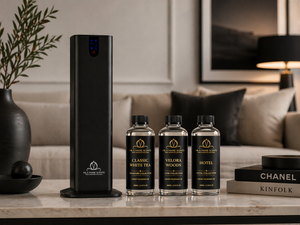
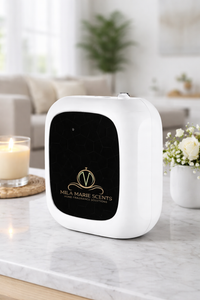
Which Diffuser Is Right for You?
| Feature | HALO Tower | ECHO Mini |
|---|---|---|
| Price | $229.00 | $89.00 |
| Coverage | Up to 4,000 sq ft | Up to 700 sq ft |
| Type | Floor Standing | Desktop / Wireless |
| App Control | Yes (Bluetooth) | Yes (Bluetooth) |
| Free Oils Included | Yes (3 Oils) | Sold separately |
| Warranty | 1-Year | 1-Year |
| Guarantee | 30-Day | 30-Day |
Swipe to compare →
Get 10% Off Your First Order
Join the Mila Marie family for early access to new fragrances, exclusive offers, and expert scenting tips.