How to Make Non Toxic Room Spray at Home
You can make a non toxic room spray right in your kitchen with just a few ingredients. It's cheap, it's easy, and it works for a quick refresh. In this guide, we'll walk you through every step, from picking your base to blending scents you like. No fancy equipment needed.
Two things up front, because we would rather say them than have you find out later. First, “non toxic” is the phrase people search for, and it is the phrase in this article's title, but we cannot verify it for a mixture you blend at home. Homemade does not mean harmless. Essential oils are concentrated, some of them are genuinely risky around cats, birds and small children, and nobody , us included , has tested your particular batch. Treat every recipe here as a fragrance recipe, not a health product, and if anyone in the home is pregnant, asthmatic or otherwise sensitive, ask a doctor or a vet rather than a blog.
Second, a disclosure about what we sell. Mila Marie Scents sells fragrance oils formulated for waterless cold-air diffusers, and that is the only use we sell them for. They are not sold as a spray base, we do not test them in water or alcohol mixtures, and they are not for use on skin. So this tutorial is built around ordinary essential oils you can buy anywhere , not around our products. If a diffuser is what you actually want, that is a different article and a different purchase; a spray and a diffuser are not the same tool.
Step 1: Choose Your Base Liquid
Every room spray needs a liquid to carry the scent. You have two main choices: water or alcohol. Water is the simplest. It's cheap and you already have it. But water alone doesn't help the scent last. Think about it. Spray water in the air, and it evaporates fast. The smell fades with it. That's why most DIY recipes add a bit of alcohol. Alcohol helps the oil mix with water and makes the scent linger longer. Good options include vodka (the cheaper the better, it doesn't need to taste good) or witch hazel. Both are cheap and easy to find at any grocery store or pharmacy. Witch hazel has a mild natural scent that fades quickly, so it won't compete with your essential oils. Avoid rubbing alcohol , it has a harsh smell that will fight your oils. Stick with clear, unscented alcohol. One more tip: always use distilled water, not tap water. Tap water has minerals and bacteria that can make your spray go bad faster. Mix about 1 part alcohol to 3 parts water for a good balance. If you don't want any alcohol at all, use just distilled water and shake well before each use. The scent won't last as long, but it's still perfectly effective for a quick refresh.
Step 2: Select Safe Essential Oils
Now for the fun part. You get to pick the smells. Commonly used ones include lavender, lemon, peppermint, eucalyptus, tea tree and orange, all of which are easy to buy. Ignore “therapeutic grade” on a label , it is a marketing phrase, not a certified standard, so it tells you nothing. Buy from a seller who publishes what is in the bottle, and read what they publish.
The table below is the received wisdom on these oils, not our testing, and it is not veterinary or medical advice. We have kept the cautions because a caution is worth reading even when it is only conventional wisdom; we have taken out the reassurances, because “safe” is not ours to certify. Cinnamon, clove, oregano and thyme oils are usually left out of room sprays as too harsh.
When you're choosing oils, quality matters, mostly because cheap oils often smell thin or artificial. To be direct about our own catalogue: the Mila Marie Scents fragrance oils are formulated for waterless cold-air diffusion and that is what we sell them for. Please do not use them as the base for a water or alcohol spray. We have not tested them that way, we make no claim about how they behave mixed with water, and using them in a spray is outside what the product is sold to do. For the recipe below, buy ordinary essential oils. Start with no more than 20-30 drops total per 4-ounce bottle. You can always add more later. Less is more when you're learning what you like.
Step 3: Mix Proper Ratios for Safety and Scent
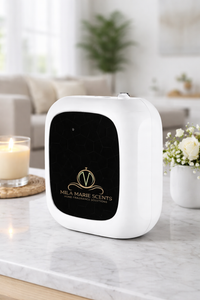
Getting the ratio right is key. Too much oil and the spray becomes overpowering. Too little and you can't smell it. For a standard 4-ounce spray bottle, use this formula: fill the bottle about 3/4 full with distilled water. Add 1 tablespoon of vodka or witch hazel (this helps the oil mix). Then add 15, 25 drops of essential oil total. That's the sweet spot. If you're combining oils, make sure the total drops stay within that range. For a stronger scent, you can go up to 30 drops, but don't exceed that , more isn't better. It can actually make the spray feel greasy or irritate your nose. Put the cap on and shake well. That's it. The alcohol helps the oil disperse in the water so you don't get big drops of pure oil shooting out. One more safety note: never use citrus oils in plastic spray bottles if you're using high concentrations , they can degrade the plastic over time. Glass spray bottles are best. They're reusable, they don't react with citrus oils, and they look nicer on a counter. Dilution is the part worth getting right: a spray mixed too strong is more likely to irritate somebody's eyes or airway, and it will not smell better for it. So stick to these ratios. You can always make a second batch if you want a different scent. Write down what you use so you can recreate your favorites. If you would rather not mix anything at all, a diffuser is the other way to do this: the ECHO Mini is $89, is rated for up to 700 sq ft, and runs waterless on fragrance oil made for it , which is the use our oils are actually sold for. It is a different product to a spray, not a better version of one: a spray is cheap, portable and instant, a diffuser is a standing appliance.
Step 4: Store and Extend Shelf Life

Your homemade non toxic room spray won't last forever. Because it's made with water and natural oils, bacteria can grow over time. That's why storage matters. Use a dark glass bottle , amber or cobalt blue. Light degrades essential oils and makes them lose their smell faster. Store it in a cool, dark place. A cabinet or pantry works great. Don't leave it in direct sunlight or near a stove. How long does it last? Typically about 2 to 4 weeks. If you use distilled water and alcohol, it may last a bit longer. But if you see any cloudiness, smell something off, or see floaters, toss it and make a new batch. You may see vitamin E oil recommended as a preservative. It is an antioxidant, which slows the oils going off, but it is not an antimicrobial and it will not stop anything growing in the water , do not let it talk you into keeping an old bottle. Alcohol is the part that actually discourages growth, so a slightly heavier hand with the vodka keeps the spray longer. But for most people, making a fresh batch every couple of weeks is easy enough. Mark the bottle with the date you made it. That way you know when it's time to replace. If the every-few-weeks batch is the part that puts you off, that is the honest case for a diffuser instead: the ECHO Mini disperses fragrance oil by air rather than heat and there is nothing to mix or throw away. But for a quick DIY, a fresh spray is perfect.
Step 5: Customize Scents for Every Room
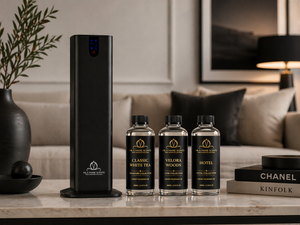
Different rooms need different vibes. Your bathroom spray shouldn't smell like your bedroom. Here's how to tailor your non toxic room spray for each space. For the bathroom, go with eucalyptus, tea tree, or peppermint. These are fresh and help neutralize odors. For the living room, try citrus or lavender , uplifting but not too sharp. For the bedroom, lavender, chamomile, or vanilla work great for relaxation. For the kitchen, lemon, orange, or rosemary cut through cooking smells without clashing. You can also make seasonal blends. In fall, try a mix of orange and cinnamon. In winter, peppermint and pine. The options are endless. Start with a base oil that you love, then add a supporting note. For example, if you like lavender but want it brighter, add a few drops of lemon. The ratio is key: use about 60% of your main scent and 40% of the accent. Write down your recipes in a notebook. If you want a pre-blended hotel-style scent without the guesswork, Mila Marie Scents sells fragrance oils that are already balanced , for a cold-air diffuser, which is the only way we sell them for use. Do not put them in a spray bottle. But creating your own blends is part of the fun. Experiment and find what makes your home smell like you.
Frequently Asked Questions
How long does homemade non toxic room spray last?
Typically 2 to 4 weeks if stored properly in a dark glass bottle in a cool place. Using distilled water and a small amount of alcohol helps extend the shelf life. Always check for cloudiness or off smells before using.
Can I use tap water for my room spray?
It's not recommended. Tap water contains minerals and bacteria that can cause your spray to spoil faster and may leave a residue. Distilled water is best for a longer-lasting, cleaner spray.
Do I need to use alcohol in my room spray?
No, but it helps. Alcohol helps the essential oils mix with water and makes the scent last longer. If you skip it, just shake the bottle well before each use. The spray won't last as long but will still work.
How many drops of essential oil should I use?
For a 4-ounce bottle, use 15 to 25 drops total. If you're combining oils, keep the total in that range. More than 30 drops can be overpowering and may cause irritation.
Is non toxic room spray safe for pets?
We cannot tell you it is. Nobody has tested your mixture, and several oils in common use , tea tree, peppermint and eucalyptus among them , are the ones vets warn about, particularly for cats and birds, which process these compounds differently from people. Keep the spray and the bottle away from animals, do not spray into a closed room an animal cannot leave, and ask your vet before you use anything scented around a pet. If the answer matters to you, the vet is the person to ask, not this page.
Can I use commercial fragrance oils in my DIY spray?
Only if the oil is sold for that use and the maker says so on the label. Plenty of fragrance oils are formulated for one delivery method and not another. Ours are an example of the ones to leave out: Mila Marie Scents fragrance oils are made for waterless cold-air diffusers, we do not sell or test them as a spray base, and they are not for use on skin. If a seller will not tell you what a bottle is intended for, that is your answer.
Why did my room spray turn cloudy?
Cloudiness is usually a sign that the oils are separating or bacterial growth. It can happen if you used tap water or stored the spray in a warm place. Shake well and if it doesn't clear up, discard and make a fresh batch.
Can I add other ingredients like herbs or flowers?
You can, but be careful. Fresh herbs and flowers can introduce bacteria and spoil the spray quickly. If you want to infuse natural scents, make a separate infusion and strain it well, then use within a few days.
Conclusion
Making your own room spray is cheap, it is quick, and you know exactly which few ingredients went in. That last part is the honest appeal of it , not that a homemade spray is safe and a bought one is not. We've covered the basics: a clean base of distilled water and a touch of alcohol, essential oils from a seller who tells you what is in the bottle, sensible ratios, a dark glass bottle, and a blend per room. Keep it away from children, pets and food, make a fresh batch rather than trusting an old one, and stop using anything that makes someone in the house cough or itch. If you would rather not mix anything, Mila Marie Scents sells cold-air diffusers and fragrance oils made for them , a different product for a different job, and the one we can actually stand behind. Start with a simple lavender spray and see whether you like living with it.
High-coverage diffusers for large spaces
Which Diffuser Is Right for You?
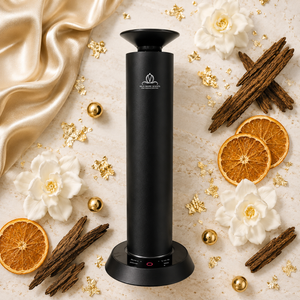
| Feature | ECHO Mini | Elite Mini Pro | HALO Tower |
|---|---|---|---|
| Price | $89.00 | $99.00 | $229.00 |
| Coverage | Up to 700 sq ft | Up to 1,200 sq ft | Up to 4,000 sq ft |
| Type | Desktop / Wireless | Desktop / Wireless | Floor Standing |
| App Control | Yes (Bluetooth) | Wireless Remote | Yes (Bluetooth) |
| Free Oils Included | Sold separately | Sold separately | Yes (3 Oils) |
| Warranty | 1-Year | 1-Year | 1-Year |
| Guarantee | 30-Day | 30-Day | 30-Day |
Swipe to compare →
Get 10% Off Your First Order
Join the Mila Marie family for early access to new fragrances, exclusive offers, and expert scenting tips.