The First Eight Seconds: Why Your Entryway Is the Room to Scent
You have about eight seconds between someone opening your door and forming an opinion. Scent does most of that work, and it does it before anyone has looked at the furniture.
Which means the entryway is the highest-return space in the building to scent — and it's the one most people skip, because nobody spends time there.
Why the entry matters more than the living room
Three things make it disproportionate.
It's the only room experienced fresh. Everyone who walks in has just come from outside, so their sense of smell hasn't adapted to anything indoors yet. The entry is the one place your scent lands at full strength on everyone.
It sets the frame for everything after. A house that smells considered on arrival reads as clean and cared-for throughout. The impression is made before anyone reaches the room you actually tidied.
Nobody stays long enough to tire of it. Fragrances that would feel heavy over an hour in a living room work fine in a hallway where people pass through in seconds.
The problem with entryways
They're usually the worst-scented part of a home, for structural reasons.
Entries are often small, frequently without a supply vent of their own, and constantly vented to outside air every time the door opens. A diffuser in the living room rarely reaches them with any strength.
So the fix is either putting a unit there specifically, or using a system that distributes through the ductwork rather than from one room outward.
What to put there
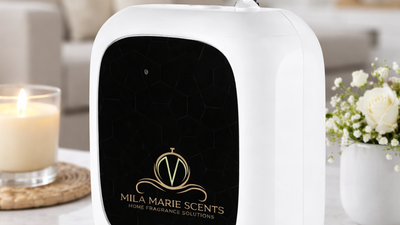
Entryways rarely have a convenient outlet, and running a cord across a hallway isn't an option. That's the case for the cordless ECHO Mini at $89 — it covers up to 700 sq ft and sits on a console table, a shelf, or a shoe cabinet with nothing plugged in.
For an entry that opens directly into a living space — common in apartments and open plans — the ECHO at $139 covers up to 1,500 sq ft and handles both at once.
And if you'd rather scent the whole house evenly so the entry is simply part of it, an HVAC unit distributes through your existing ductwork: the PULSE at $149 up to 1,800 sq ft, or the INFINITY from $399.

Placement inside the entry
Not directly beside the door. It seems logical and it's wrong — air rushing in when the door opens pushes the mist straight back out. Set it a few feet inside instead.
Waist height or above. A console table beats the floor. Scent disperses better from height and the unit is less likely to be kicked.
Clear of coats and rugs. Soft furnishings absorb fragrance. A diffuser tucked behind hanging coats spends its output on the coats.
Away from the extractor if there is one. Some entries share ventilation with a bathroom or utility space, which will pull your scent out.
Timing beats intensity
The temptation is to run the entry strong so it definitely registers. That backfires — a strong hallway is the first thing guests notice and the thing they mention afterwards.
Schedule instead. A run window in the hour before people typically arrive means the space is scented on entry and settling by the time anyone's had a conversation in it. Fragrance lingers well after the unit stops.
For a home, that's late afternoon. For a business, before opening. For a rental, before check-in.
Choosing a scent for an entry
This is one place where a slightly richer fragrance works, because nobody stays. Something with presence — a warm wood, a soft amber, a proper floral — registers immediately and then people move on into the house.
Two cautions. If your entry opens directly into your main living space, treat it as that room and go lighter. And avoid anything food-adjacent at the door: vanilla and bakery scents on arrival read as covering something, which is the opposite of the impression you want.
The Scent Card Sample Pack is 15 of ours for $15 — the practical way to find one with enough presence for a hallway.
The test
Walk out, stay out for two hours, and come back in paying attention. That's the only reliable read you'll get on your own entry, because after twenty minutes inside you can't judge it at all.
Better still, ask someone arriving for the first time. They're experiencing exactly what your guests, buyers, or customers experience.
Frequently Asked Questions
Should I scent my entryway separately?
Yes, unless you're using an HVAC system that scents the whole house evenly. Entries are small, often lack their own vent, and vent to outside constantly — so a diffuser elsewhere rarely reaches them.
What's the best diffuser for an entryway?
The cordless ECHO Mini at $89, since entries rarely have a convenient outlet and covers up to 700 sq ft.
Where exactly should it go?
A few feet inside the door rather than beside it, at waist height or above, clear of coats and rugs.
How strong should the entry be?
Moderate, and scheduled rather than constant. A hallway that's noticeably strong is the thing guests remember and mention.
What scent works best at a door?
Something with presence — warm woods, soft amber, a defined floral. Avoid food-adjacent scents, which read as covering an odour.
What if my entry opens into the living room?
Treat it as one space, use a unit sized for the whole area, and go lighter than you would for a closed hallway.
High-coverage diffusers for large spaces
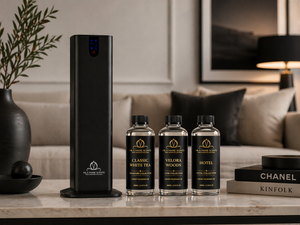
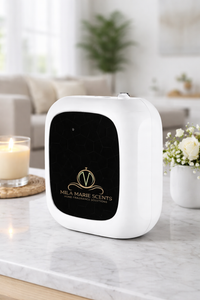
Which Diffuser Is Right for You?
| Feature | HALO Tower | ECHO Mini |
|---|---|---|
| Price | $229.00 | $89.00 |
| Coverage | Up to 4,000 sq ft | Up to 700 sq ft |
| Type | Floor Standing | Desktop / Wireless |
| App Control | Yes (Bluetooth) | Yes (Bluetooth) |
| Free Oils Included | Yes (3 Oils) | Sold separately |
| Warranty | 1-Year | 1-Year |
| Guarantee | 30-Day | 30-Day |
Swipe to compare →
Get 10% Off Your First Order
Join the Mila Marie family for early access to new fragrances, exclusive offers, and expert scenting tips.