How to Calculate Fragrance Oil Refill Frequency
A busy household can stretch a 300 ml diffuser tank for almost three weeks, even at a high oil use rate. The trick is to calculate from real use instead of guessing from room size alone. Use this five-step method to estimate refill dates, then adjust the result after one full cycle.
Step 1: Record Your Diffuser’s Oil Capacity and Coverage Area
Start with two numbers: the reservoir capacity in millilitres and the rated coverage area in square feet. These figures set the limits for your refill estimate and show whether the diffuser fits the room.
Find the capacity on the product page, the bottle label, or the user guide. Write it down as a whole number, such as 100 ml, 200 ml, or 300 ml. Do not use the bottle’s outer size. You need the amount of oil the diffuser can hold.
Next, measure the area you want to scent. For one room, multiply its length by its width. If you have an open plan, add the connected areas that share airflow. Keep bedrooms or closed doors out of the total unless you run a separate diffuser there.
Coverage helps you pick the right unit, but it doesn't tell you how quickly the oil will run out. A large room may need more output, yet a timer can reduce daily use. The supplied diffuser data shows this clearly. URPOWER covers 3,000 square feet, but its listed refill interval is still about 19.84 days.
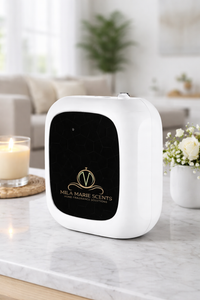
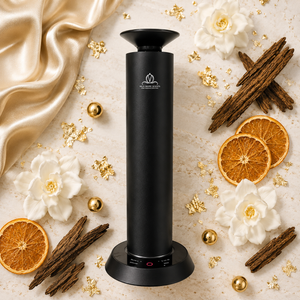
For a Mila Marie Scents setup, match the model to the zone before you calculate oil use. ECHO Mini is listed for spaces up to 700 square feet. PULSE is listed for up to 1,800 square feet. INFINITY connects with HVAC systems for areas up to 16,000 square feet.
The cold air diffuser maintenance and refill guide can help you record the tank size and check the unit before you begin.
For a direct comparison, the Mila Marie Scents ECHO Cold-Air Diffuser with Starter Kit has a stated 200 ml reservoir. Its actual refill date still depends on the selected intensity and daily schedule, so treat capacity as the starting point.
Step 2: Find Your Daily Oil Consumption Rate
Daily oil use equals the diffuser’s hourly consumption rate multiplied by the hours it runs each day. This is the number that turns a tank size into a refill date.
Look for a rate stated in millilitres per hour. Some makers publish it. Many don't. If your diffuser lists 0.4 ml per hour and runs for eight hours, the daily use is 3.2 ml.
Use this formula:
Daily consumption = hourly consumption × hours per day
Let's use the supplied URPOWER figures. Its listed consumption rate is 0.63 ml per hour. At eight hours per day, it uses 5.04 ml per day. Divide its 300 ml capacity by 5.04 ml, and the result is about 59.5 days, which doesn't match the listed interval of 19.84 days.
That mismatch matters. It suggests the published interval may use a different operating pattern, such as a higher effective schedule, or a calculation that includes busy-household settings. You should never treat a listed rate and a listed interval as interchangeable without checking the conditions behind each figure.
Another supplied example is Scentiplus, which lists 0.4 ml per hour with a 100 ml capacity. At eight hours daily, the simple estimate depends on the schedule. At 16 hours daily, the estimate falls to 15.6 days. Run time changes the answer fast.
If your brand does not publish consumption, measure it. Fill the reservoir to a marked level. Record the starting amount. Run the diffuser on your normal schedule for three to seven days. Then measure how much oil is gone and divide that amount by the hours used.
Use a kitchen scale only if the manufacturer gives a reliable conversion method. Oil density differs by blend, so volume markings are better for refill planning. Keep your notes in millilitres rather than mixing ounces and millilitres.
That is why your first cycle should be treated as a calibration run.

Step 3: Apply the Refill-Frequency Formula
Divide the oil capacity by daily consumption to estimate how many days one full tank will last. The formula is simple, but the inputs must describe the same schedule.
Refill frequency in days = oil capacity ÷ daily consumption
If a diffuser holds 200 ml and uses 4 ml each day, divide 200 by 4. Your first estimate is 50 days. If you run it for fewer hours, daily use drops. If you raise intensity, daily use rises.
Use the table below as a planning guide. These examples use stated consumption figures where available and clearly label the operating assumption.
The dataset average gives another useful starting point. Across 18 items with capacity data, the average tank holds 641 ml. The average consumption rate is 0.48 ml per hour. At eight hours daily, that produces about 17 days of estimated use.
That average is a planning marker, not a promise. The products vary by design, room size, output setting, and schedule. A 641 ml tank may last longer than a smaller tank if the diffuser runs at a lower rate.
For Mila Marie Scents, use the same math when the product instructions provide a rate. The ECHO Cold-Air Diffuser with Starter Kit gives a 200 ml capacity and notes that use can range from several days at high intensity to a week or more at lower settings. That range is more useful than one fixed promise because it reflects how people actually run a diffuser.
Round your result down by two or three days for the first reminder. Running empty can interrupt the scent and may make a busy week harder to manage.
Step 4: Adjust the Estimate for Household Activity and Scent Strength
Adjust the first estimate for run time, intensity, airflow, and household traffic. These factors explain why two homes with the same tank can have different refill dates.
Begin with daily hours. A home that is empty during school and work hours may need scent only before breakfast and during the evening. A home with pets, children, frequent guests, or remote work may run the diffuser for much longer.
Then check intensity. Higher output uses more oil per hour. It can also make your nose adapt faster, which may tempt you to raise the setting again. Start low for several days before changing it. Judge the scent when you first enter the room, not after sitting there for an hour.
Room airflow changes the result too. Open doors and HVAC circulation can spread scent into more space. They can also move fragrance away from the target room. A diffuser placed near a strong draft may use oil without giving you the same perceived coverage.
Use a simple adjustment method:
- Short schedule: reduce daily hours before changing intensity.
- Large open area: check coverage before raising output.
- Weak scent: inspect the nozzle before assuming the oil is too mild.
- Strong scent: lower intensity or add off periods.
Yet greater coverage did not guarantee faster depletion. URPOWER covered 3,000 square feet and still listed an interval near 20 days. Bigger space alone is a poor refill predictor.
Heat-free cold-air diffusion also changes how you think about scheduling. Pressurized air breaks fragrance oil into a fine mist without heating it or adding water. The basic atomization idea described in Wikipedia’s nebulizer reference helps explain why output depends on the device’s air system, nozzle, and settings rather than room size alone.
If you want to compare scent strength, test one change at a time. Mila Marie Scents products such as White Tea or Velora Woods can suit different moods, but changing the oil and intensity together makes the result hard to read.
For a room-by-room plan, the seasonal scent rotation guide gives a useful framework for setting different schedules in living areas, bedrooms, and smaller zones.
Step 5: Track One Refill Cycle and Set a Low-Maintenance Reminder
Track one complete refill cycle before setting a permanent reminder. Your measured result will be more useful than a generic estimate because it reflects your home and your schedule.
At the next refill, write down:
- The date and time you filled the reservoir.
- The oil capacity or starting fill level.
- The intensity setting.
- The run schedule for each day.
- The date and level when the oil needs replacing.
Keep the schedule steady for the first cycle. Don't switch from eight hours to 16 hours halfway through unless you note the change. If your household schedule changes, split the record into two periods and calculate each one separately.
When the oil reaches roughly 20 percent of the reservoir, set a refill reminder. The exact level depends on the device, so follow its instructions. A low-level reminder gives you time to order or select the next fragrance without forcing the diffuser to run dry.
Use a calendar reminder based on your measured interval minus two days. If your first cycle lasts 24 days, set the next reminder for day 22. After two cycles, move the reminder closer to your average result.
Keep maintenance in the same routine. A partly blocked nozzle can reduce mist and make you think the oil has lost strength. Mila Marie Scents recommends regular nozzle care, with the exact cleaning interval tied to usage. The cold-air diffuser nozzle cleaning guide explains how to check for residue before changing your schedule.
Families often benefit from one fixed refill day. Choose a day when you already manage household tasks. Small offices can use a shared calendar, while HVAC setups such as the Mila Marie Scents INFINITY may need a zone-based record rather than one room estimate.
If you switch fragrance oils, record the change. Luxuré Harmony, White Tea, and Velora Woods may not consume at the same rate if their viscosity or your chosen intensity differs. Avoid mixing oils in the same reservoir unless the product instructions allow it.
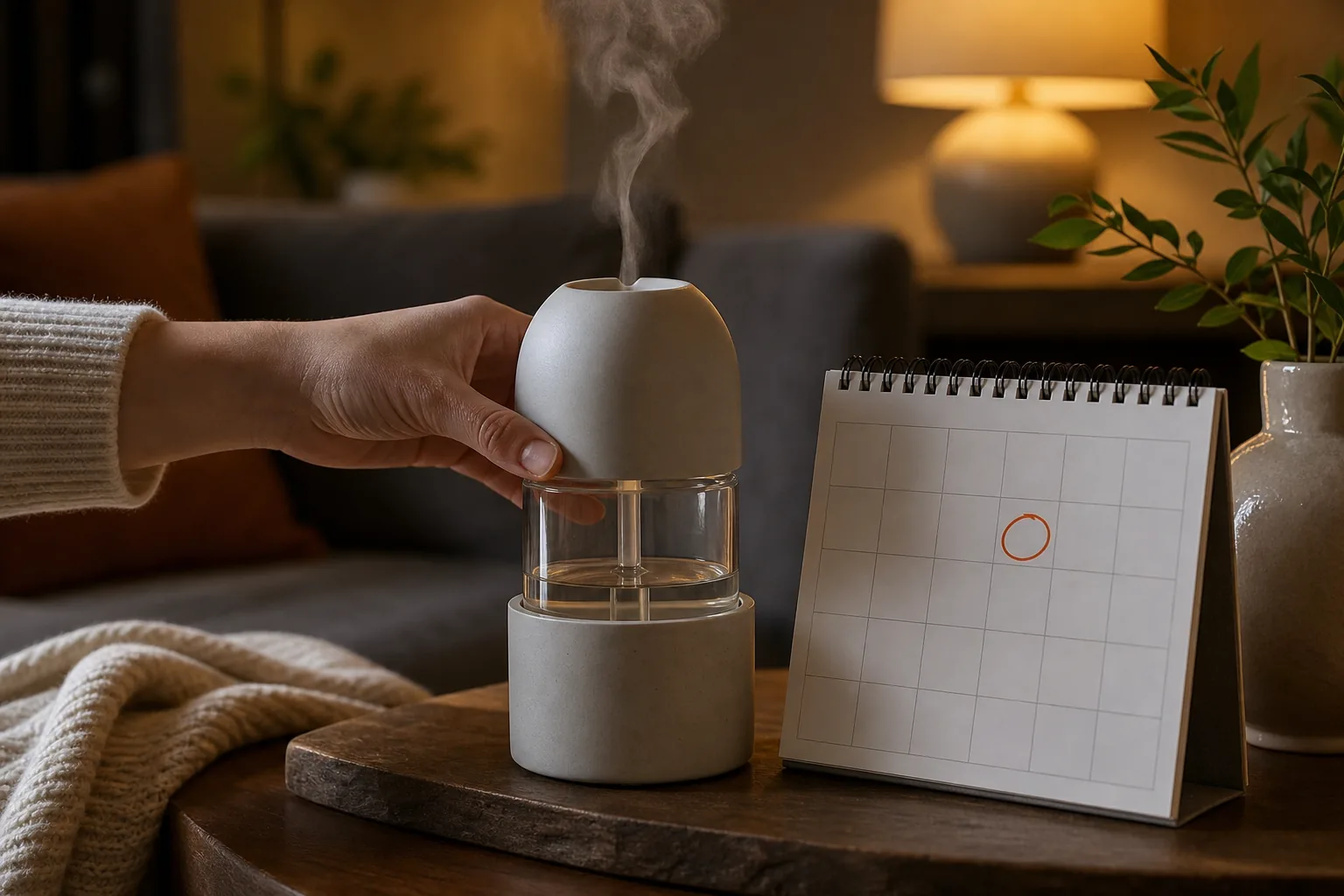
For a low-maintenance setup, keep one spare refill in storage and review the reminder after every second cycle. That small habit prevents most surprise gaps.
Frequently Asked Questions
How do I calculate fragrance oil refill frequency for a busy household?
Divide the diffuser’s oil capacity by its daily oil use. Find daily use by multiplying millilitres per hour by hours run each day. For example, a 100 ml tank using 0.4 ml per hour for eight hours uses 3.2 ml daily, so apply the formula to estimate the refill interval. Adjust it after tracking one real refill cycle.
What is a heat free cold air diffuser?
A heat free cold air diffuser uses pressurized air to break fragrance oil into a fine mist without heating the oil or adding water. For refill planning, focus on reservoir capacity, output rate, intensity, and run time. Mila Marie Scents uses this type of waterless diffusion across products such as ECHO Mini and PULSE.
How long does a cold air diffuser bundle last?
A cold air diffuser bundle lasts as long as its oil supply lasts at your chosen schedule. Capacity alone can't give an exact date. Record the oil amount, hourly use, and daily run time, then divide capacity by daily consumption. A bundle with a larger reservoir may need fewer refill visits, but high intensity can shorten the cycle.
Can I mix and match fragrance oils?
You can mix and match fragrance oils across refill cycles, but clean the nozzle before changing scents. Residue can alter the first notes of the new fragrance. For a smoother rotation, test one oil at low intensity before committing to a full schedule. Mila Marie Scents offers named scent choices such as White Tea and Velora Woods for different room moods.
Where can I try a luxury fragrance oil sample pack?
A luxury fragrance oil sample pack is the best way to test scent preference before buying a larger refill, if the brand provides one. Check Mila Marie Scents product availability for current sample options. After choosing a scent, track its first cycle separately because fragrance choice and intensity can change your refill timing.
Conclusion
Use capacity divided by daily consumption as your starting estimate, then trust one measured refill cycle more than a generic claim. For a polished, low-maintenance home setup, choose the Mila Marie Scents diffuser that fits your zone, record its schedule, and set a reminder two days before your expected refill date.
Best-selling luxury fragrance oils
Get 15% Off Your First Order
Join the Mila Marie family for early access to new fragrances, exclusive offers, and expert scenting tips.