What Scent Should a Med Spa Use?
Choosing a fragrance for a med spa is a different exercise from choosing one for your house. The same scent meets every client who walks in, some of them anxious, some in discomfort, some there for something they haven't told their friends about.
Here's how to choose well.
Start from what the space already smells like
Med spas carry a clinical background note — disinfectant, alcohol wipes, sometimes acetone or the sharpness that comes with certain treatments. That's a sign the room is clean, and you're not trying to erase it.
What you're doing is giving the space a character so the clinical note isn't the first thing anyone registers. That argues for fragrances that sit alongside a clean smell rather than fighting it.
The registers that work
Clean and composed. Tea, soft musk, light citrus. This is the safest and most effective direction — it reads as fresh and professional, and it's genuinely hard to dislike. If you only try one family, try this.
Soft floral. Works well in spaces designed to feel restorative rather than clinical, particularly aesthetics and skin-focused practices. Keep it subtle; heavy florals become cloying fast in a closed room.
Light green or spa-adjacent. Eucalyptus-style and cucumber-style profiles signal treatment and wellbeing, though they can read as generic if that's all a client ever smells anywhere.
What to avoid, and why
Gourmand and food scents. Vanilla, caramel, bakery notes. In a clinical space these read as covering something, which is the opposite of what you want a client thinking about.
Heavy amber and oud. Beautiful in a hotel lobby, oppressive in a treatment room where someone lies still for an hour.
Anything strongly perfume-like. Clients wear their own fragrance. A space that competes with it feels crowded.
Seasonal changes. Regular clients recognise your scent — that recognition is most of its value. Switching it quarterly throws that away.
Reception and treatment rooms want different things
Worth treating as separate decisions.
Reception can carry a little more presence. Clients are there briefly, they're forming a first impression, and this is where the space gets to feel considered.
Treatment rooms should run noticeably lighter, or stay neutral during services. Sixty minutes at close range is a completely different exposure, and for anyone prone to migraines it's where fragrance becomes a problem rather than a pleasure.
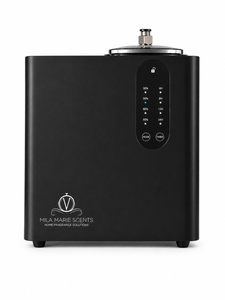
For rooms where you want fragrance kept low and separate, the cordless ECHO Mini at $89 lets you control each room independently rather than running one level everywhere.

Test it on the people who'll live with it
Two groups matter, and neither is you.
Your staff. They're in it eight hours a day. A fragrance that's pleasant for four minutes can grate by hour six, and staff who dislike the scent will quietly turn it off.
A handful of regular clients. Ask three or four whose judgement you trust. They'll tell you things a staff vote won't.
The Scent Card Sample Pack is 15 of our best-sellers for $15 — leave the cards at the desk for a week and let people react before you commit the premises.
Intensity matters more than the fragrance you pick
A well-chosen scent at too high a setting is worse than a plain one at the right level.
Staff adapt within about twenty minutes and will ask you to turn it up. Clients arrive fresh from outside. Set the level by walking in from the street first thing in the morning, and hold it there regardless of what anyone says by mid-afternoon.
Client sensitivities
Some clients are genuinely sensitive to fragrance, and in a med spa some arrive already unwell or nervous. Keep intensity low enough that scent is felt rather than smelled, and make sure a staff member can switch a room's unit off before a specific appointment — Bluetooth control makes that a few seconds' work.
If a client says the scent bothers them, treat it as information about your setting rather than about them.
Once you've chosen
Buy the 500ml at $69 rather than smaller bottles — it's roughly half the per-millilitre cost of the 200ml, and a business running through opening hours moves through oil faster than a home.
For the hardware side — which unit suits your premises, and why ventilation comes before fragrance — see Scent Systems for Med Spas and Salons.
Frequently Asked Questions
What scent should a med spa use?
Clean registers work best — tea, soft musk, light citrus. They read as fresh and professional and are difficult to dislike, which matters when every client meets the same fragrance.
Should treatment rooms use the same scent as reception?
Same fragrance, lower intensity — or neutral during services. An hour at close range is very different from four minutes in the waiting area.
What scents should a clinic avoid?
Gourmand and food notes, which read as covering something in a clinical space, and heavy amber or oud, which become oppressive in a small room.
How do I choose without committing?
Leave sample cards at the desk for a week and ask staff and a few regular clients. They live with it; you pass through.
Should I change the scent seasonally?
No. Recognition is most of the value — returning clients associate the fragrance with your practice.
What if a client is sensitive?
Keep the setting low and make it easy to switch a room off before their appointment.
Best-selling diffusers & fragrances for your home
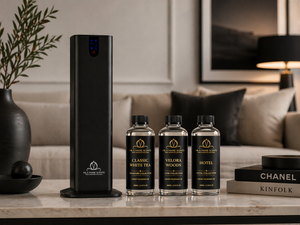
Which Diffuser Is Right for You?
| Feature | INFINITY | HALO Tower |
|---|---|---|
| Price | $399.00 | $229.00 |
| Coverage | Up to 16,000 sq ft | Up to 4,000 sq ft |
| Type | HVAC / Whole-Home | Floor Standing |
| App Control | Yes (Bluetooth) | Yes (Bluetooth) |
| Free Oils Included | Yes (3 Oils) | Yes (3 Oils) |
| Warranty | 1-Year | 1-Year |
| Guarantee | 30-Day | 30-Day |
Swipe to compare →
Get 10% Off Your First Order
Join the Mila Marie family for early access to new fragrances, exclusive offers, and expert scenting tips.